Northwest, Citrus Heights
Updated · 11,384 residents
The Northwest neighborhood in Citrus Heights is a quiet, suburban community characterized by a mix of standard tract housing and higher-density residential developments. While the area offers consistent sidewalk access, residents often experience notable noise levels from nearby transit corridors and a subdued, low-key atmosphere.
Key Highlights
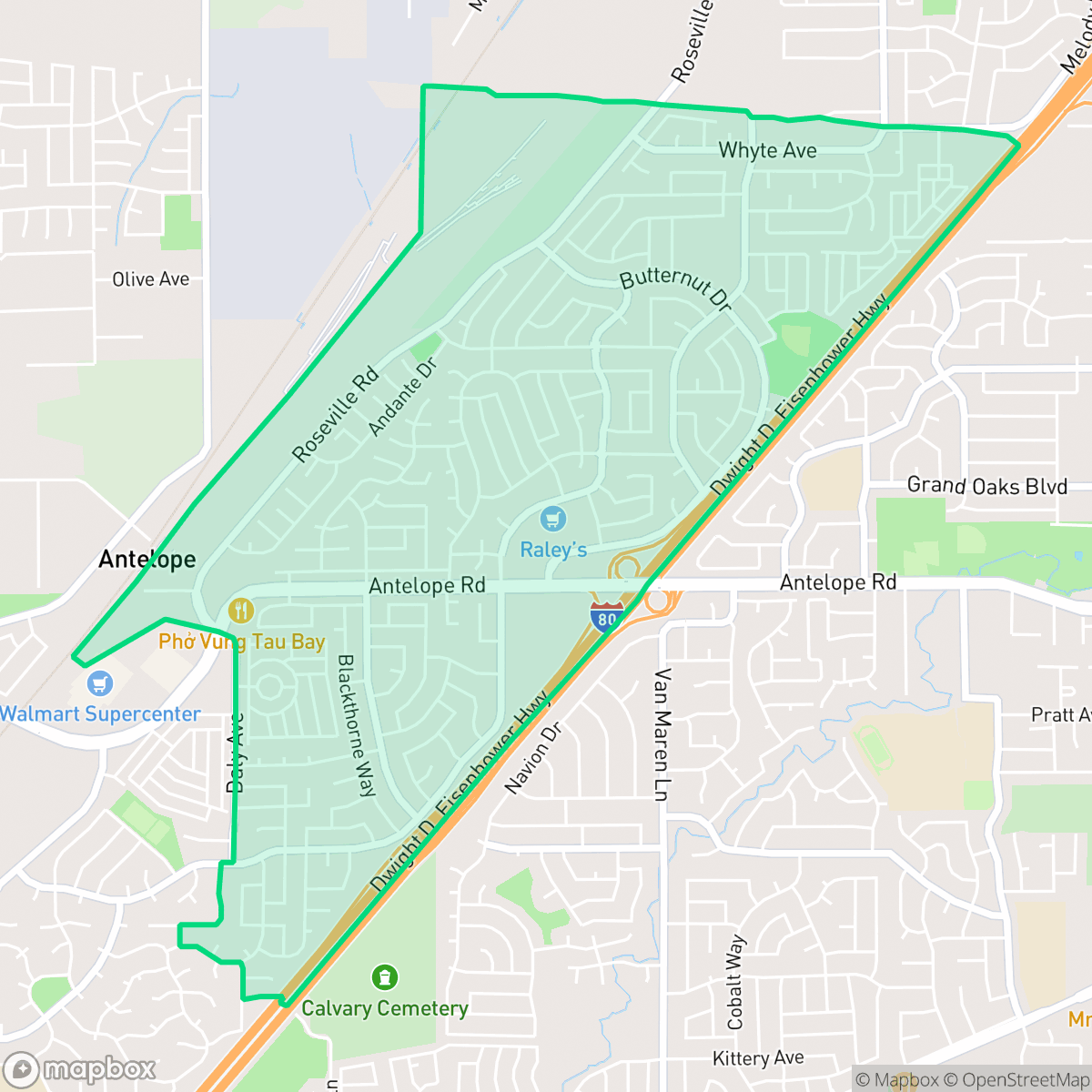
About Northwest
Located in the northern section of Citrus Heights, this neighborhood features a diverse suburban landscape that blends single-family homes with higher-density residential layouts. The area is primarily residential with limited commercial activity, fostering a quiet environment that appeals to those seeking a low-key lifestyle. The local housing stock is varied, ranging from well-maintained properties with private grounds to more compact developments, reflecting a balanced demographic profile of families and individuals.
Living in this part of the city involves certain trade-offs, particularly regarding acoustic comfort due to the proximity of major freeway and railroad traffic. While the neighborhood provides reliable sidewalk infrastructure for pedestrians, overall walkability is occasionally constrained by high-traffic intersections and mature tree cover. Families in the area have access to a range of educational options through several overlapping school districts, and residents generally benefit from high levels of health insurance coverage.
Neighborhood Scores Across 15 Qualities
Housing density is moderate with some properties featuring shared walls or narrow gaps between structures. According to iHuus data, the level of privacy is slightly lower than the Citrus Heights average due to the more closely packed residential layouts.
Pedestrians benefit from consistent sidewalks and safe crossings at major intersections, though connectivity is occasionally limited by high traffic areas and mature tree canopy. This level of walkability is slightly below the Citrus Heights average according to iHuus data.
Residential landscapes range from large homes with manicured grounds and private pools to denser, standard tract housing. This visual variety sits slightly below the Citrus Heights average due to the presence of more repetitive housing patterns and high-density mobile home parks.
Access to public parks and green belts varies by block, though some areas offer fewer walking options for pets compared to the Citrus Heights average. Residents primarily rely on private backyards and street verges for outdoor space according to iHuus data.
Residential layouts consist primarily of dense suburban development and single-family homes. This area maintains a similar balance of open space and built environments as the rest of Citrus Heights.
Suburban streets and light industrial zones create a subdued atmosphere with limited commercial activity. According to iHuus data, the level of social activity and service density is slightly below the Citrus Heights average.
Frequent noise from nearby transit corridors, such as heavy freeway and railroad traffic, makes this area slightly more audible than the Citrus Heights average. According to iHuus data, these acoustic disturbances are a notable feature for residents in this part of the neighborhood.
Air quality in this area fluctuates between acceptable and unhealthy levels, posing occasional concerns for sensitive groups. This condition is consistent with the city average, according to iHuus data.
Residential and retail spaces dominate this area with very little heavy industry visible. While some light commercial activity exists, the neighborhood lacks the significant industrial density found elsewhere in Citrus Heights.
Health insurance accessibility is strong in this area, with coverage levels appearing slightly higher than the Citrus Heights average according to iHuus data.
Political leanings in this area are largely split, reflecting a distribution that is very similar to the broader Citrus Heights community.
Residents live alongside a balanced spread of young adults, families, and older individuals. This age distribution is roughly in line with the average seen throughout Citrus Heights, according to iHuus data.
Flood risk levels remain uncertain because federal authorities have not yet completed a detailed study for this area. According to iHuus data, this level of risk is roughly comparable to the average across Citrus Heights.
Address-Level Insights for Northwest


iHuus Neighborhood Intelligence Insights
Get address-level neighborhood insights for Northwest
- Street-level scores — see how individual blocks compare, not just neighborhood averages
- Micro-zone boundaries — identify quiet pockets, flood boundaries, and walkable clusters before you visit
- 15 dimensions in full — walkability, noise, air quality, school quality, insurance coverage, population age profile, urban/rural index, and more
- Boundary risk alerts — know if your address sits near a block boundary where scores drop, the kind of detail no listing will ever mention
- School insights — individual school ratings and insights, not just district-level data
- Compare before you commit — side-by-side data across neighborhoods, down to block precision
No credit card required
Compare with Any Neighborhood
| Dimension | Northwest | Arcade Creek |
|---|---|---|
| 🚶 Walkabilityavg 7.64 | ||
| 🔊 Acoustic Comfortavg 3.51 | ||
| 🤫 Privacy Indexavg 5.76 | ||
| 🎨 Visual Appealavg 6.71 | ||
| 🐕 Dog Friendlinessavg 6.51 | ||
| 🗺️ Urban-Rural Indexavg 6.7 | ||
| ✨ Neighborhood Vibeavg 4.83 | ||
| 🏥 Health Insurance Coverageavg 7.48 | ||
| 🌿 Air Qualityavg 6 | ||
| 🏭 Industrial Proximityavg 9.36 | ||
| 🌊 Flood Safetyavg 4.4 | ||
| 🗳️ Ideological Leanavg 4.27 | ||
| 👥 Population Age Profileavg 5.07 | ||
| 🔥 Fire Safety | ||
| 🏫 School Quality |
Northwest Rankings
School Districts Serving Northwest
School Insights for Northwest
Below average outcomes; significant attendance and academic challenges.
School Insights
See what's really behind every school rating near Northwest
- Individual school ratings — each school's own score with outcome context, not just a district average
- Enrollment & class size data — student-to-teacher ratio and how it compares to the state average
- Full demographics breakdown — ethnicity and gender composition for every school in the enrollment zone
- Every school in the district — all schools within the enrollment boundary ranked by rating, not just the closest one
- Grade levels & benchmarks — elementary through high school, with below/above state-average flags
No credit card required