Arcade Creek, Citrus Heights
Updated · 6,720 residents
Arcade Creek is a suburban neighborhood in Citrus Heights defined by its extensive green corridors and access to the historic Arcade Creek Trail. While the area offers high walkability and dog-friendly spaces, residents should expect notable ambient noise from surrounding road traffic.
Key Highlights
About Arcade Creek
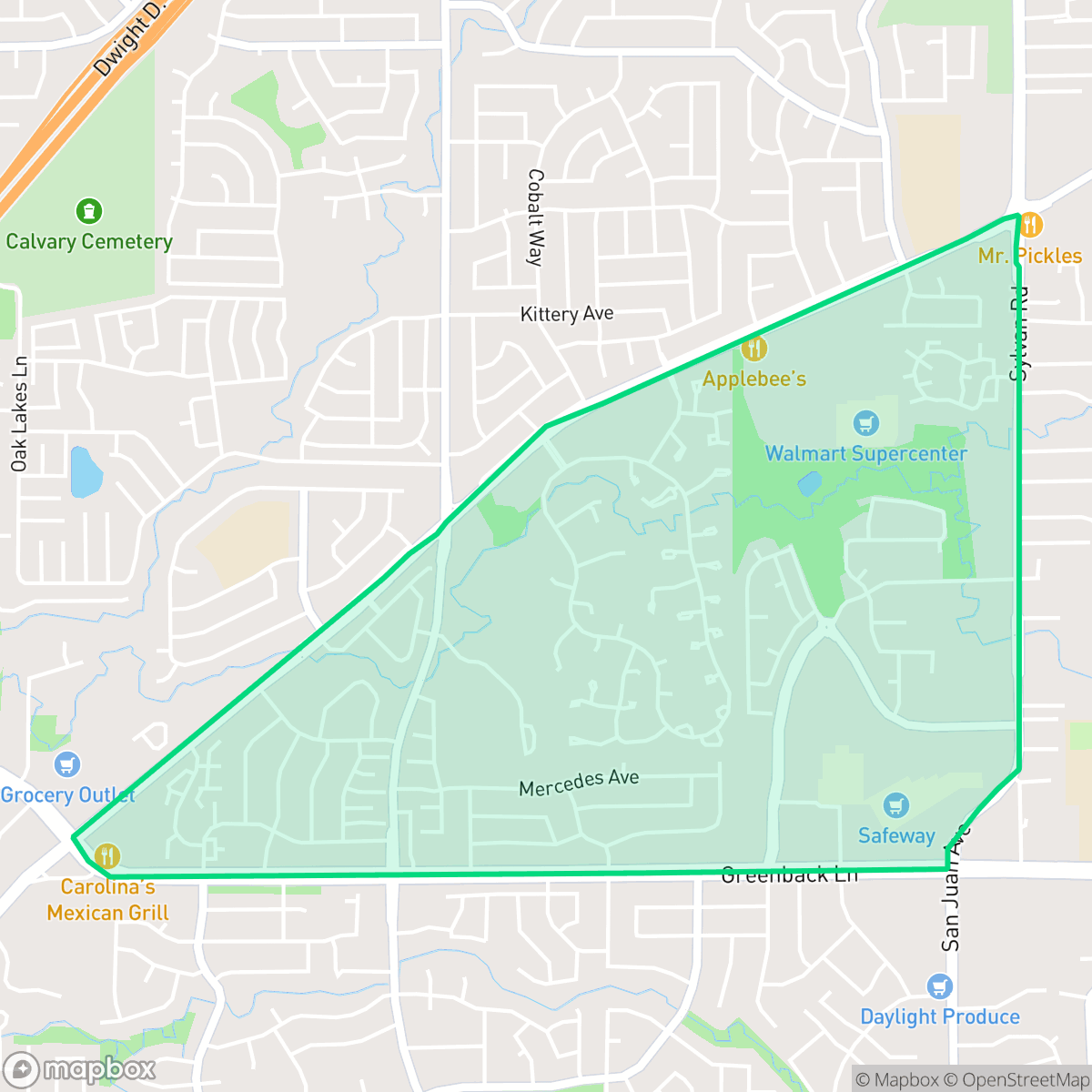
The Arcade Creek neighborhood (Neighborhood Area 4) in Citrus Heights, California, is deeply tied to the region’s agricultural and pioneer history. The multi-use Arcade Cripple-Creek Trail traverses the neighborhood, weaving through historical properties like the former Mitchell Farm, purchased in 1866 by English immigrants Edward and Zenobia Crabb. During Prohibition, their descendants grew grapes here, secretly selling them to bootleggers under the cover of night. The trail also crosses the historic Pilchar Farm, where a devastating 1933 barn fire prompted the formation of the area’s first volunteer fire department. Additionally, the neighborhood encompasses lands once owned by the pioneer Cross family, who helped build the historic Sylvan School in 1862. Today, local landmarks like Tempo Park and the Arcade Creek Park Preserve protect the area's natural riparian corridors and oak savannahs.
The area serves as a quiet residential enclave characterized by a mix of suburban housing and preserved riparian corridors. Residents benefit from significant green space, including Tempo Park and the Arcade Creek Park Preserve, which contribute to a visual appeal that exceeds the city average. According to iHuus data, the neighborhood provides a balanced environment that blends residential living with accessible outdoor recreation, making it a suitable choice for those who prioritize proximity to nature within a suburban framework.
Prospective residents should note that while the neighborhood is highly walkable, the density of local businesses remains sparse, often requiring travel for daily errands. The acoustic environment is influenced by road traffic, resulting in noise levels that may impact those sensitive to sound. Additionally, the local San Juan Unified School District presents a varied academic landscape; while the district offers specialized programs, it faces challenges common to the region regarding infrastructure maintenance and inconsistent campus performance.
Neighborhood Scores Across 15 Qualities
Residential spacing is consistent with the city average, featuring a mix of suburban tract housing and multi-unit clusters. Some areas provide a buffer between neighbors, while other sections contain more densely packed apartment and mobile home communities.
Continuous sidewalks and safe crossings allow for easy movement through residential loops. This level of walkability is slightly higher than the Citrus Heights average, particularly along arterial roads with dedicated pedestrian infrastructure.
Large, well-maintained homes and frequent private backyard pools contribute to a visual landscape that is more attractive than the Citrus Heights average. According to iHuus data, the area features spacious driveways and premium suburban amenities.
Extensive central greenbelts and connected walking paths provide ample space for pets away from traffic. According to iHuus data, these accessible park systems make the area slightly more dog friendly than the rest of Citrus Heights.
Frequent open land and scattered homes among woodland areas provide a semi-rural atmosphere that is slightly less dense than the Citrus Heights average, according to iHuus data.
Quiet residential streets are interspersed with pockets of activity, including local dining and community hubs. This area offers a slightly more active atmosphere than the Citrus Heights average due to several accessible cafes and social spots.
Frequent acoustic disturbances from nearby freeway and railroad traffic characterize this area. According to iHuus data, noise levels are notably higher than the Citrus Heights average.
Air quality in Arcade Creek fluctuates between acceptable and unhealthy levels on certain days. According to iHuus data, these conditions are consistent with the average found throughout Citrus Heights.
Industrial facilities and warehouses are absent from this area, which consists entirely of residential and light commercial spaces. This lack of heavy industry is consistent with the broader Citrus Heights area.
Health insurance coverage among residents is high, appearing nearly consistent with the Citrus Heights average according to iHuus data.
Political views in this area are distributed fairly evenly between conservative and liberal leaning residents. This reflects a more balanced ideological landscape than the broader Citrus Heights area, according to iHuus data.
Residents live among a diverse range of age groups, including young adults, families, and seniors. According to iHuus data, this demographic spread is slightly more varied than the average seen across Citrus Heights.
Property locations within Arcade Creek are situated inside a designated floodplain, which represents a significantly higher risk of flooding than the Citrus Heights average. Residents should be aware that flood insurance is typically required for properties in this area according to iHuus data.
Address-Level Insights for Arcade Creek


iHuus Neighborhood Intelligence Insights
Get address-level neighborhood insights for Arcade Creek
- Street-level scores — see how individual blocks compare, not just neighborhood averages
- Micro-zone boundaries — identify quiet pockets, flood boundaries, and walkable clusters before you visit
- 15 dimensions in full — walkability, noise, air quality, school quality, insurance coverage, population age profile, urban/rural index, and more
- Boundary risk alerts — know if your address sits near a block boundary where scores drop, the kind of detail no listing will ever mention
- School insights — individual school ratings and insights, not just district-level data
- Compare before you commit — side-by-side data across neighborhoods, down to block precision
No credit card required
Compare with Any Neighborhood
| Dimension | Arcade Creek | Birdcage Heights |
|---|---|---|
| 🚶 Walkabilityavg 7.64 | ||
| 🔊 Acoustic Comfortavg 3.51 | ||
| 🤫 Privacy Indexavg 5.76 | ||
| 🎨 Visual Appealavg 6.71 | ||
| 🐕 Dog Friendlinessavg 6.51 | ||
| 🗺️ Urban-Rural Indexavg 6.7 | ||
| ✨ Neighborhood Vibeavg 4.83 | ||
| 🏥 Health Insurance Coverageavg 7.48 | ||
| 🌿 Air Qualityavg 6 | ||
| 🏭 Industrial Proximityavg 9.36 | ||
| 🌊 Flood Safetyavg 4.4 | ||
| 🗳️ Ideological Leanavg 4.27 | ||
| 👥 Population Age Profileavg 5.07 | ||
| 🔥 Fire Safety | ||
| 🏫 School Quality |
Arcade Creek Rankings
School Districts Serving Arcade Creek
School Insights for Arcade Creek
Below average outcomes; significant attendance and academic challenges.
School Insights
See what's really behind every school rating near Arcade Creek
- Individual school ratings — each school's own score with outcome context, not just a district average
- Enrollment & class size data — student-to-teacher ratio and how it compares to the state average
- Full demographics breakdown — ethnicity and gender composition for every school in the enrollment zone
- Every school in the district — all schools within the enrollment boundary ranked by rating, not just the closest one
- Grade levels & benchmarks — elementary through high school, with below/above state-average flags
No credit card required