Cathedral Canyon Cove, Cathedral City
Updated · 1,684 residents
Cathedral Canyon Cove is a quiet, low-density desert enclave known for its high visual appeal and exceptional air quality. Residents enjoy a serene environment with direct access to the Santa Rosa and San Jacinto Mountains National Monument, making it an ideal location for those seeking a peaceful, nature-oriented lifestyle.
Key Highlights
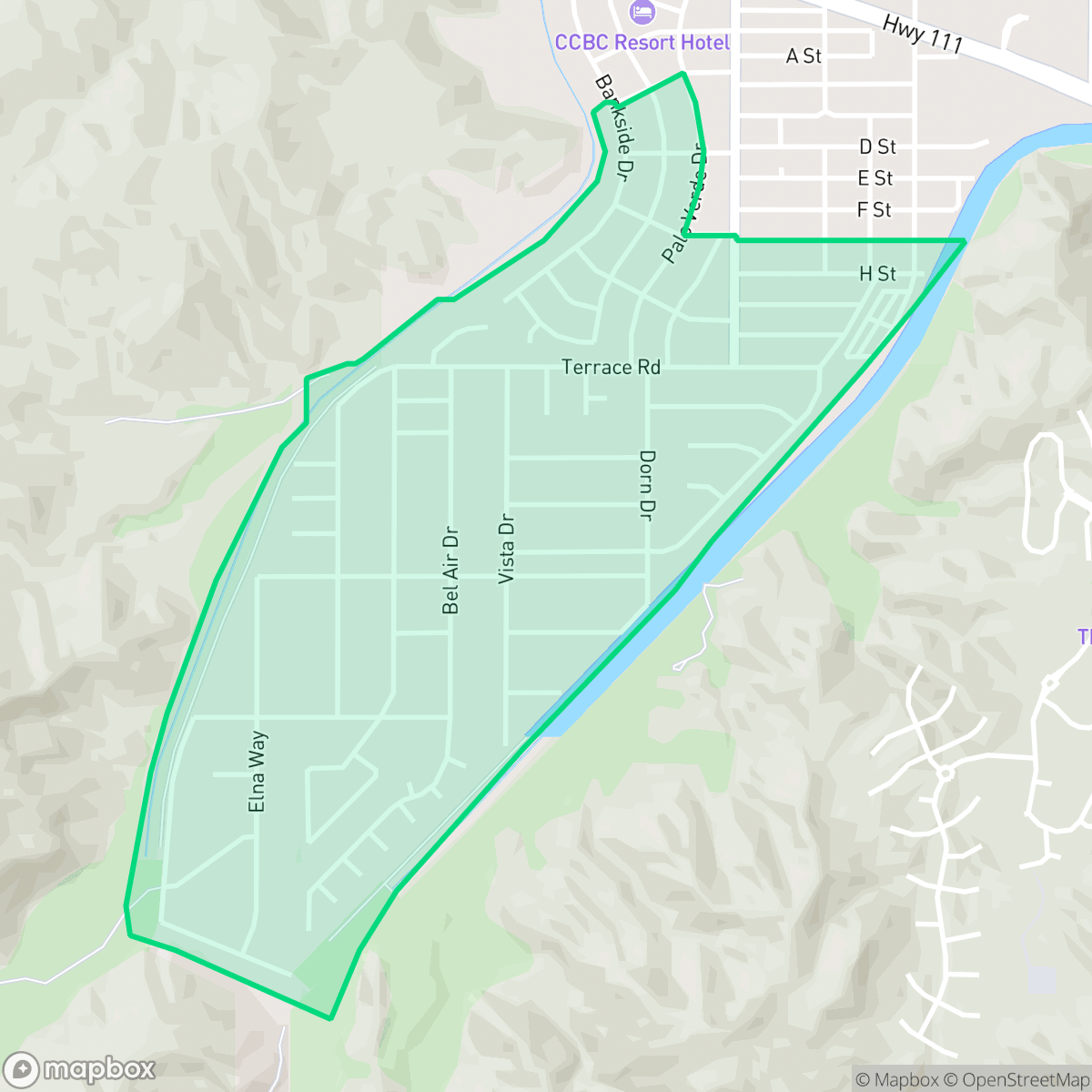
About Cathedral Canyon Cove
Nestled in the foothills of the Santa Rosa Mountains, the Cathedral Canyon Cove neighborhood (often referred to as part of "The Cove") has a rich history as a mid-20th-century creative enclave. Beginning in the 1930s, the area became a renowned desert artists' colony, attracting prominent transcendentalist and modernist painters like Agnes Pelton, who designed and built her Adobe-style home and studio here in the late 1930s. Architecturally, the neighborhood is defined by its eclectic mix of mid-century modern residences—including homes built in the iconic Meiselman and Alexander styles—and 1970s California ranches. Today, the neighborhood maintains its bohemian character and serves as a gateway to the Santa Rosa and San Jacinto Mountains National Monument, with the historic Cathedral Canyon Trailhead beginning at its southern edge.
The area offers a distinct, low-density living experience characterized by its rural feel and high visual appeal. With a strong emphasis on residential quietude, it provides a sanctuary from the more active parts of Cathedral City. According to iHuus data, the neighborhood benefits from excellent air quality and minimal industrial proximity, which contributes to a healthy living environment. The layout is primarily car-oriented, though it maintains a level of walkability that allows for easy access to local trailheads and natural spaces.
For prospective residents, the community offers a stable, progressive environment with high rates of health insurance coverage. While the neighborhood is exceptionally quiet, those seeking a bustling urban nightlife may find the pace of life here slower than in neighboring districts. Families should consider the local school district, which provides a mix of vocational opportunities but faces ongoing challenges with academic consistency across its campuses. The area is well-suited for retirees, outdoor enthusiasts, and those who prioritize privacy and natural beauty over proximity to commercial hubs.
Neighborhood Scores Across 15 Qualities
Residential structures are positioned with typical suburban spacing, providing slightly more buffer between neighbors than the Cathedral City average. According to iHuus data, some homes feature closely spaced layouts where properties sit near one another.
Sidewalks are available on most streets with safe crossings, but the large block sizes and desert climate make walking less practical than in other parts of Cathedral City. According to iHuus data, the overall ease of navigating the area on foot is below the city average.
Large modern homes and a high density of private backyard pools create an aesthetically pleasing environment that is more visually polished than the average area in Cathedral City. According to iHuus data, the presence of premium amenities and expansive driveways contributes to a premium streetscape.
Narrow sidewalks and a lack of nearby public parks make walking dogs difficult. While most homes feature private backyards, the area offers fewer green verges for exercise than the rest of Cathedral City.
Frequent open land and scattered residential parcels provide a more semi-rural atmosphere than the typical Cathedral City landscape. According to iHuus data, the area features a blend of dense suburban blocks and expansive arid spaces.
Local energy varies between quiet, remote landscapes and more active pockets containing dining options like Desert Thai. This area offers a slightly more active atmosphere than the Cathedral City average, though most residents will rely on a car to reach nearby amenities.
Steady noise from nearby busy streets is a noticeable presence, though levels are slightly more tranquil than the average for Cathedral City. According to iHuus data, a consistent hum from local traffic characterizes the area.
Air quality remains consistently high with rare instances of elevated readings. This area maintains slightly cleaner air than the average for Cathedral City, according to iHuus data.
Industrial presence is non-existent here, as the area consists exclusively of residential spaces, commercial zones, and open desert. This lack of warehouses or hazard sites provides a cleaner environment than the city average according to iHuus data.
Health insurance accessibility is notably higher here than the Cathedral City average, according to iHuus data. Most residents in this area possess active health coverage.
Voting patterns and census indicators reflect a distinctly liberal leaning that is more pronounced than the Cathedral City average, according to iHuus data.
Residents experience a varied demographic mix of young adults, families, and older individuals. This age distribution is slightly more balanced than the average seen across Cathedral City.
Located within a 100-year floodplain, this area faces a higher risk of flooding than the Cathedral City average. Residents should be aware that flood insurance is typically required for properties in this zone according to iHuus data.
Significant fire hazards exist within this area, presenting a much higher risk level than the average for Cathedral City. Residents should prepare for enhanced mitigation needs according to iHuus data.
Address-Level Insights for Cathedral Canyon Cove


iHuus Neighborhood Intelligence Insights
Get address-level neighborhood insights for Cathedral Canyon Cove
- Street-level scores — see how individual blocks compare, not just neighborhood averages
- Micro-zone boundaries — identify quiet pockets, flood boundaries, and walkable clusters before you visit
- 15 dimensions in full — walkability, noise, air quality, school quality, insurance coverage, population age profile, urban/rural index, and more
- Boundary risk alerts — know if your address sits near a block boundary where scores drop, the kind of detail no listing will ever mention
- School insights — individual school ratings and insights, not just district-level data
- Compare before you commit — side-by-side data across neighborhoods, down to block precision
No credit card required
Compare with Any Neighborhood
| Dimension | Cathedral Canyon Cove | Alameda |
|---|---|---|
| 🚶 Walkabilityavg 8.27 | ||
| 🔊 Acoustic Comfortavg 3.4 | ||
| 🤫 Privacy Indexavg 5.69 | ||
| 🎨 Visual Appealavg 7.25 | ||
| 🐕 Dog Friendlinessavg 6.06 | ||
| 🗺️ Urban-Rural Indexavg 7.04 | ||
| ✨ Neighborhood Vibeavg 5.24 | ||
| 🏥 Health Insurance Coverageavg 6.86 | ||
| 🌿 Air Qualityavg 8.31 | ||
| 🏭 Industrial Proximityavg 9.61 | ||
| 🌊 Flood Safetyavg 3.61 | ||
| 🗳️ Ideological Leanavg 9.38 | ||
| 👥 Population Age Profileavg 5.58 | ||
| 🔥 Fire Safetyavg 0.17 | ||
| 🏫 School Quality |
Cathedral Canyon Cove Rankings
School Districts Serving Cathedral Canyon Cove
School Insights for Cathedral Canyon Cove
Below average outcomes; significant attendance and academic challenges.
School Insights
See what's really behind every school rating near Cathedral Canyon Cove
- Individual school ratings — each school's own score with outcome context, not just a district average
- Enrollment & class size data — student-to-teacher ratio and how it compares to the state average
- Full demographics breakdown — ethnicity and gender composition for every school in the enrollment zone
- Every school in the district — all schools within the enrollment boundary ranked by rating, not just the closest one
- Grade levels & benchmarks — elementary through high school, with below/above state-average flags
No credit card required