Media, Burbank
Updated · 5,114 residents
The Media District serves as a primary hub for global entertainment production, characterized by its high walkability and proximity to major studio campuses. While the area offers diverse dining and a lively commercial atmosphere, residents often experience significant road noise and limited access to public green spaces.
Key Highlights
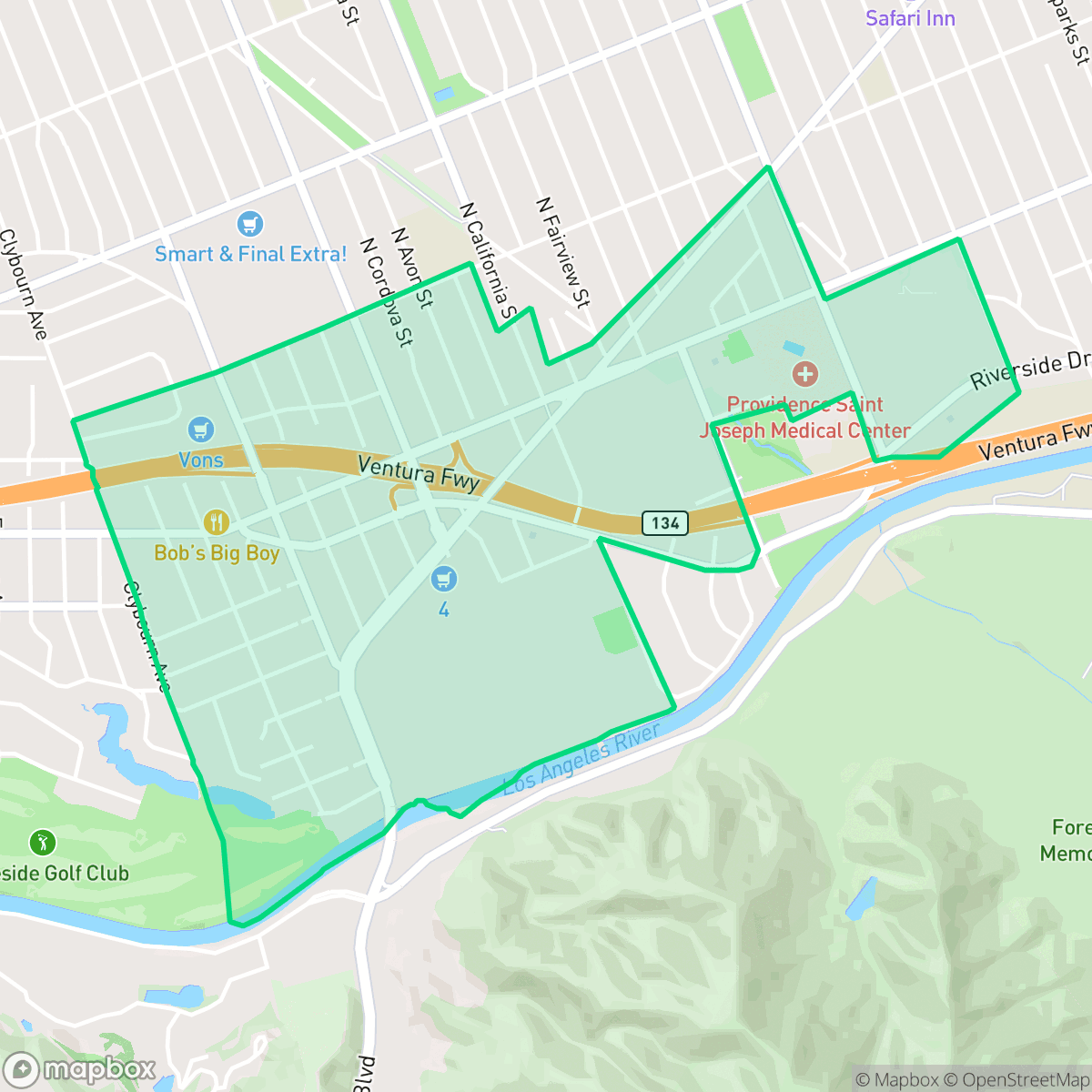
About Media
The Media neighborhood of Burbank, CA, also known as the Media District, developed rapidly in the mid-20th century as the city evolved into a global entertainment hub. Situated along Burbank's southern edge, the neighborhood's identity is anchored by world-famous production facilities, including Warner Bros. Studios—which took over the historic First National Pictures lot in 1929—and the Walt Disney Company headquarters, established in 1940. The former NBC Studios (now The Burbank Studios) opened at Olive and Alameda Avenues in 1952, hosting iconic broadcasts like The Tonight Show Starring Johnny Carson. A cornerstone of the neighborhood's cultural character is the Smoke House Restaurant. Founded in 1946 and expanded in 1955 by architect Wayne McAllister, this Tudor-style steakhouse became a legendary, low-key sanctuary for Old Hollywood stars, animators, and studio executives.
The neighborhood functions as a dense suburban environment that effectively blends residential living with active commercial corridors. Residents benefit from high walkability, allowing for convenient access to local dining, coffee shops, and daily amenities without needing a vehicle. The area supports a professional demographic, reflected in high health insurance coverage and a strong sense of community engagement, while maintaining a consistent mix of single-family homes and mid-rise apartment blocks.
Prospective residents should consider the trade-offs of living in such a high-traffic zone, as road noise from surrounding streets is a notable factor in daily life. While the area offers a convenient urban-suburban mix, it lacks significant public parks, which may impact pet owners or those seeking outdoor recreation. The local school district remains a focal point for families, though it is currently navigating administrative transitions that influence the overall educational environment.
Neighborhood Scores Across 15 Qualities
Typical suburban spacing provides a moderate level of separation between homes, offering more privacy than the Burbank average. Most properties feature private yards and backyard fencing, though houses are generally positioned close to one another according to iHuus data.
Pedestrians benefit from a continuous grid of sidewalks and marked crosswalks at major intersections. This level of accessibility is notably higher than the Burbank average, making most local errands manageable on foot.
Manicured lots and large homes with private pools create an aesthetic that is notably more polished than the Burbank average. According to iHuus data, the area features frequent upscale amenities and spacious residential properties.
Walking routes feature green verges and street trees in many residential blocks, though some areas lack accessible public parks. According to iHuus data, the availability of pet-friendly space is slightly below the Burbank average.
Frequent open land and scattered homes provide a slightly more open landscape than the Burbank average. This area features a diverse blend of industrial warehouses, apartment complexes, and natural conservation areas according to iHuus data.
A variety of dining options and social hubs create a more vibrant atmosphere than the Burbank average. While many blocks feature diverse restaurants and green spaces, certain areas remain car-dependent due to the proximity of highways and light industrial zones.
Constant noise from nearby flight paths and heavy traffic is a significant factor in this area; according to iHuus data, acoustic levels are notably higher than the Burbank average.
Air quality is consistently high with rare instances of elevated readings. According to iHuus data, the air in this area is notably cleaner than the Burbank average.
Industrial presence is minimal throughout most of the area, though some large-scale logistics hubs and commercial warehouses near the freeway may introduce occasional noise and traffic. This neighborhood maintains a lower level of industrial density than the Burbank average, consisting primarily of quiet residential streets and light commercial use.
Health insurance access is significantly higher in this neighborhood than the Burbank average, according to iHuus data. Most residents have access to comprehensive medical coverage.
Voting patterns and census indicators show a strong liberal leaning, which is very similar to the broader Burbank area according to iHuus data.
Residents will find a balanced mix of young adults, families, and seniors. This demographic spread is slightly more varied than the Burbank city average, according to iHuus data.
Residual flood risk exists within this area as it sits within a 500 year floodplain, which is consistent with the average level of safety found across Burbank.
Extreme fire hazards characterize this area, requiring maximum protection measures. This level of risk is consistent with the average found throughout Burbank.
Address-Level Insights for Media


iHuus Neighborhood Intelligence Insights
Get address-level neighborhood insights for Media
- Street-level scores — see how individual blocks compare, not just neighborhood averages
- Micro-zone boundaries — identify quiet pockets, flood boundaries, and walkable clusters before you visit
- 15 dimensions in full — walkability, noise, air quality, school quality, insurance coverage, population age profile, urban/rural index, and more
- Boundary risk alerts — know if your address sits near a block boundary where scores drop, the kind of detail no listing will ever mention
- School insights — individual school ratings and insights, not just district-level data
- Compare before you commit — side-by-side data across neighborhoods, down to block precision
No credit card required
Compare with Any Neighborhood
| Dimension | Media | Burbank Center |
|---|---|---|
| 🚶 Walkabilityavg 8.7 | ||
| 🔊 Acoustic Comfortavg 0.94 | ||
| 🤫 Privacy Indexavg 4.91 | ||
| 🎨 Visual Appealavg 6 | ||
| 🐕 Dog Friendlinessavg 6.08 | ||
| 🗺️ Urban-Rural Indexavg 6.12 | ||
| ✨ Neighborhood Vibeavg 5.05 | ||
| 🏥 Health Insurance Coverageavg 6.28 | ||
| 🌿 Air Qualityavg 6 | ||
| 🏭 Industrial Proximityavg 8.15 | ||
| 🌊 Flood Safety | ||
| 🗳️ Ideological Leanavg 9.8 | ||
| 👥 Population Age Profileavg 4.59 | ||
| 🔥 Fire Safety | ||
| 🏫 School Quality |
Media Rankings
School Districts Serving Media
School Insights for Media
Below average outcomes; significant attendance and academic challenges.
School Insights
See what's really behind every school rating near Media
- Individual school ratings — each school's own score with outcome context, not just a district average
- Enrollment & class size data — student-to-teacher ratio and how it compares to the state average
- Full demographics breakdown — ethnicity and gender composition for every school in the enrollment zone
- Every school in the district — all schools within the enrollment boundary ranked by rating, not just the closest one
- Grade levels & benchmarks — elementary through high school, with below/above state-average flags
No credit card required