Plateau-Skymont, Belmont
Updated · 1,725 residents
Plateau-Skymont is a quiet, hilly residential enclave in Belmont known for its scenic canyon vistas and mid-century architectural charm. The neighborhood offers a serene atmosphere with high marks for dog friendliness and visual appeal, though residents should expect limited walkability and minimal local commercial activity.
Key Highlights
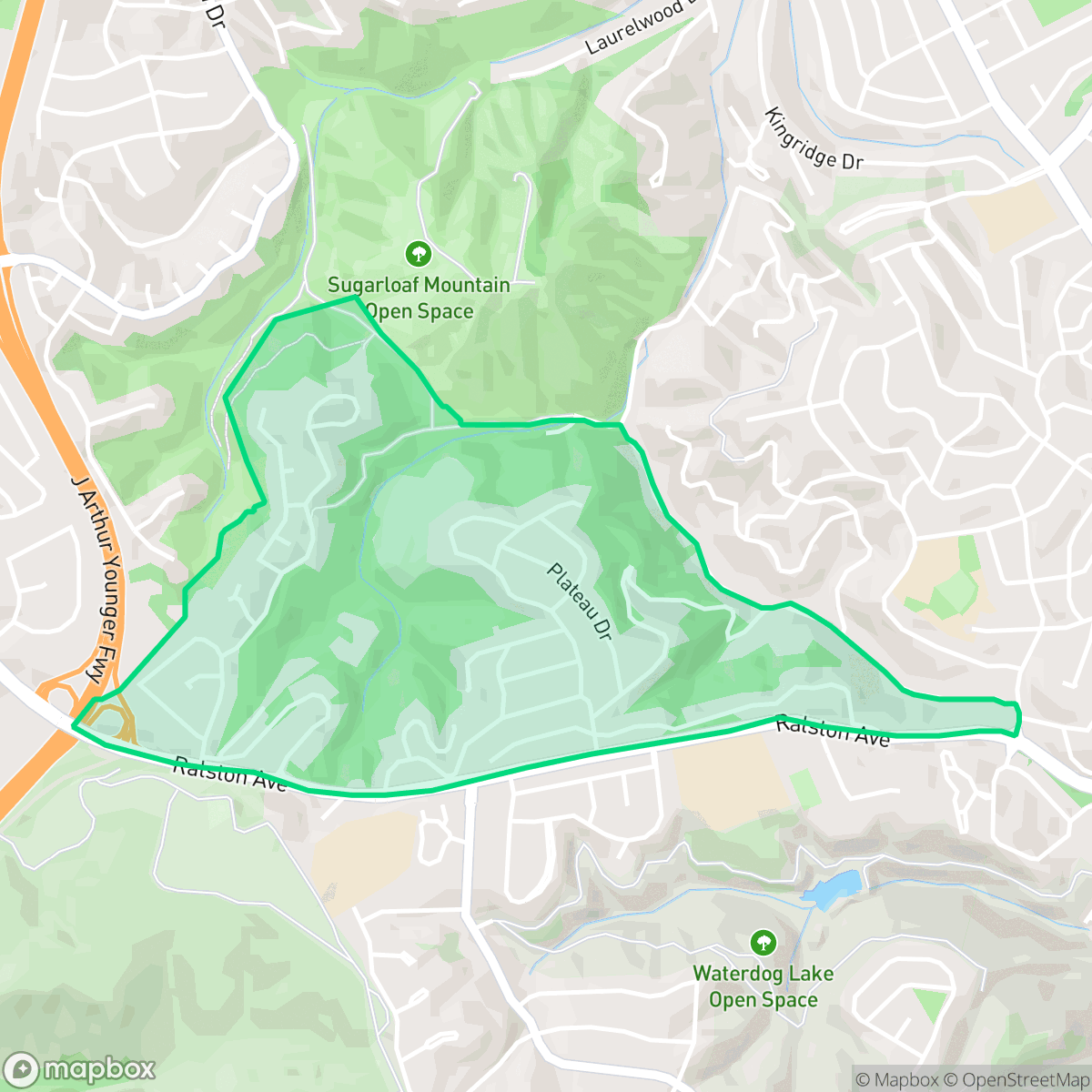
About Plateau-Skymont
The Plateau-Skymont neighborhood in Belmont, California, is a tranquil residential enclave situated in the Belmont Hills. Originally part of the ambitious 1920s "Belle Monti" country club development plans, the neighborhood's residential construction began in earnest during the late 1950s and 1960s. This development surge followed a 1955 fire that destroyed a historic nearby hunting lodge—originally built for the Pullman sleeping-car family—owned by sanitarium operator Annette Alexander. Characterized by winding, hilly roads like Plateau Drive and Skymont Drive, the neighborhood is predominantly composed of mid-century ranch-style and split-level homes built during the 1960s and 1970s. Today, Plateau-Skymont is recognized for its quiet suburban character, scenic canyon views, and proximity to Laurelwood Park.
This neighborhood is a low-density area characterized by its winding roads and proximity to expansive green spaces like Laurelwood Park. According to iHuus data, the area maintains a strong sense of seclusion, reflected in its lack of industrial proximity and a quiet acoustic environment. The visual appeal is high, with homes integrated into the hilly landscape, creating a distinct suburban aesthetic that prioritizes nature over urban density. Residents enjoy a peaceful environment where the natural surroundings are the primary feature of the local landscape.
While the area provides a tranquil living environment, it lacks the convenience of a walkable urban center, making vehicle ownership essential for daily errands. Prospective residents should note the elevated fire risk typical of the Belmont Hills region, which is balanced by access to top-tier school districts such as the Belmont-Redwood Shores Elementary School District. It is a well-suited setting for those seeking a quiet, dog-friendly community with strong health insurance coverage and a stable, family-oriented demographic.
Neighborhood Scores Across 15 Qualities
Residential spacing offers a balanced level of separation between neighbors, aligning with the typical density found throughout Belmont.
Sidewalks are available on one side of the street and safe crossings are provided, though walking accessibility is lower than the Belmont average.
Large residential properties and frequent upscale amenities create an aesthetically pleasing environment. This area features higher visual appeal than the Belmont average according to iHuus data.
Extensive trail networks and large open spaces provide ample room for pet exercise. This area offers significantly more access to parks and greenery than the Belmont average.
Frequent open land and scattered homes amidst woodlands provide a more semi-rural atmosphere than the typical Belmont residential area, according to iHuus data.
This area offers a serene, low-density environment characterized by significant open space and minimal commercial activity. According to iHuus data, the neighborhood is notably more tranquil and less active than the Belmont average, making it primarily car-dependent for accessing businesses.
Steady hum from local traffic on nearby busy streets defines the acoustic environment. This level of sound is consistent with the average found throughout Belmont.
Air quality levels in this area are consistent with the Belmont average, though sensitive groups may experience occasional periods of unhealthy air.
Industrial activity and warehouses are entirely absent from this area. Residents benefit from a purely residential environment that is even more secluded from industrial zones than the rest of Belmont.
Health insurance accessibility is very high for residents in this area, staying slightly above the Belmont average according to iHuus data.
Voting patterns and census indicators show a predominantly liberal leaning, which is very similar to the broader Belmont area according to iHuus data.
Residents live alongside a diverse range of age groups, including young adults, families, and seniors. This demographic spread is slightly more varied than the typical age distribution found in Belmont.
Some areas within the neighborhood sit within a 500-year floodplain, though the flood safety level remains higher than the Belmont city average according to iHuus data.
Wildfire vulnerability is significantly higher in this area than the Belmont average, necessitating rigorous property maintenance and enhanced fire mitigation strategies. According to iHuus data, the landscape presents a substantial fire hazard for residents.
Address-Level Insights for Plateau-Skymont


iHuus Neighborhood Intelligence Insights
Get address-level neighborhood insights for Plateau-Skymont
- Street-level scores — see how individual blocks compare, not just neighborhood averages
- Micro-zone boundaries — identify quiet pockets, flood boundaries, and walkable clusters before you visit
- 15 dimensions in full — walkability, noise, air quality, school quality, insurance coverage, population age profile, urban/rural index, and more
- Boundary risk alerts — know if your address sits near a block boundary where scores drop, the kind of detail no listing will ever mention
- School insights — individual school ratings and insights, not just district-level data
- Compare before you commit — side-by-side data across neighborhoods, down to block precision
No credit card required
Compare with Any Neighborhood
| Dimension | Plateau-Skymont | Belmont Heights |
|---|---|---|
| 🚶 Walkabilityavg 7.7 | ||
| 🔊 Acoustic Comfortavg 4.56 | ||
| 🤫 Privacy Indexavg 5.95 | ||
| 🎨 Visual Appealavg 7.72 | ||
| 🐕 Dog Friendlinessavg 8.14 | ||
| 🗺️ Urban-Rural Indexavg 7.2 | ||
| ✨ Neighborhood Vibeavg 4.23 | ||
| 🏥 Health Insurance Coverageavg 9.26 | ||
| 🌿 Air Qualityavg 6 | ||
| 🏭 Industrial Proximityavg 9.46 | ||
| 🌊 Flood Safetyavg 5.37 | ||
| 🗳️ Ideological Leanavg 9.71 | ||
| 👥 Population Age Profileavg 4.96 | ||
| 🔥 Fire Safetyavg 0.71 | ||
| 🏫 School Quality |
Plateau-Skymont Rankings
School Districts Serving Plateau-Skymont
School Insights for Plateau-Skymont
Below average outcomes; significant attendance and academic challenges.
School Insights
See what's really behind every school rating near Plateau-Skymont
- Individual school ratings — each school's own score with outcome context, not just a district average
- Enrollment & class size data — student-to-teacher ratio and how it compares to the state average
- Full demographics breakdown — ethnicity and gender composition for every school in the enrollment zone
- Every school in the district — all schools within the enrollment boundary ranked by rating, not just the closest one
- Grade levels & benchmarks — elementary through high school, with below/above state-average flags
No credit card required