Lower Solano, Albany
Updated · 973 residents
Lower Solano serves as a vibrant, highly walkable hub in Albany, defined by its dense grid of mid-century cottages and proximity to the bustling Solano Avenue commercial corridor. Residents enjoy excellent access to local parks and diverse dining options, though the area is characterized by high residential density and notable road traffic noise. According to iHuus data, the neighborhood offers a consistent suburban experience for those prioritizing daily convenience and community engagement.
Key Highlights
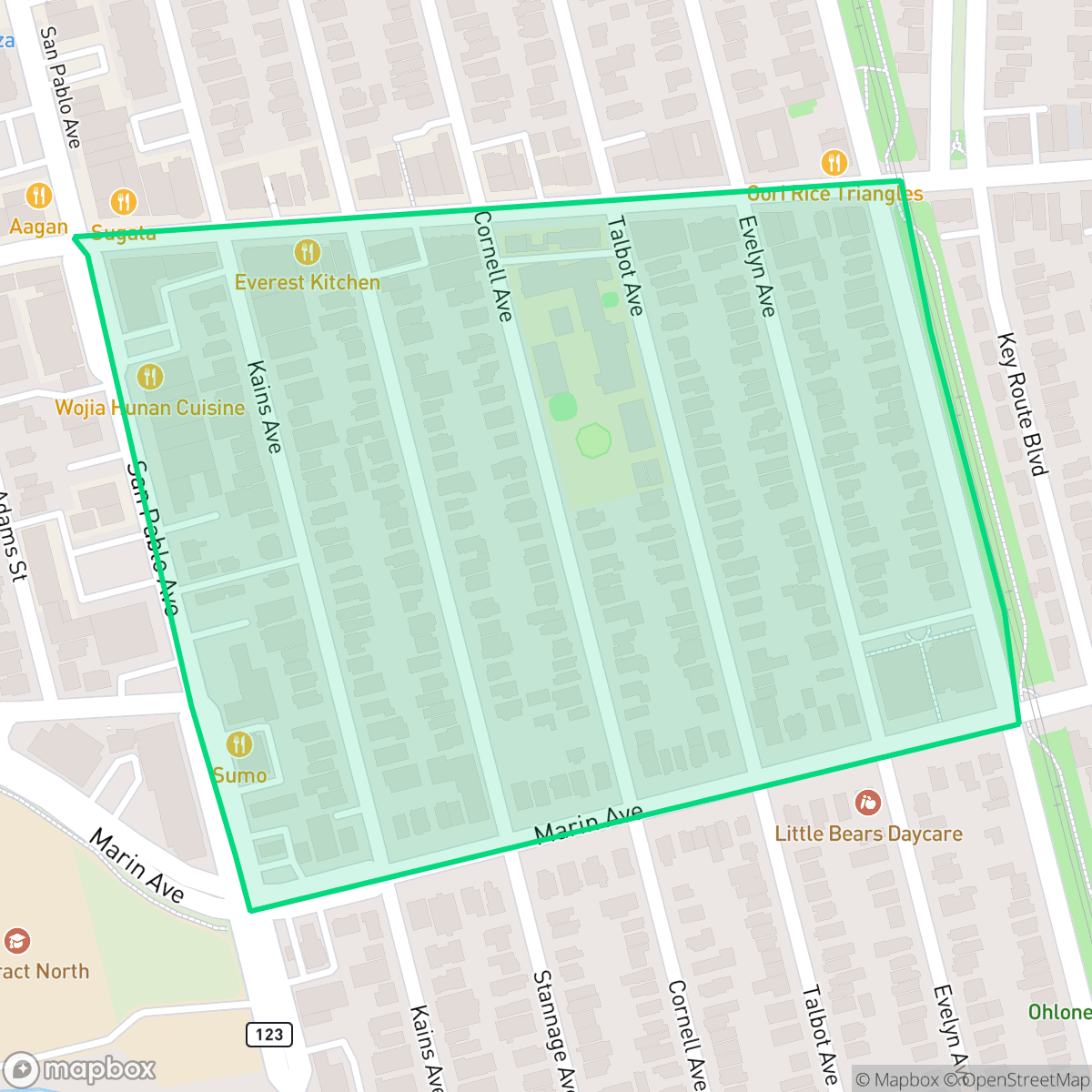
About Lower Solano
The Lower Solano neighborhood in Albany, California, is centered around the western end of Solano Avenue, which originally began as a dirt road connecting the 19th-century Boswell Ranch to the bayside settlement of Ocean View. Initially named "Main Street" within Albany, the corridor was later renamed to match Berkeley's Solano Avenue. The residential blocks are characterized by early-to-mid-20th-century Craftsman bungalows and cottages. Historically, the area's development was driven by electric rail lines; a watchman's tower, known as the Masonic Tower, once stood at the intersection of the Santa Fe and Southern Pacific tracks near Masonic Avenue. Lower Solano also served as the civic heart of the early city, housing Albany’s first city hall, built in 1915 at 1045 Solano Avenue. Today, it is famous for hosting the annual Solano Stroll street festival.
This neighborhood acts as a central artery for Albany, blending residential charm with active street-level commerce. The area features a mix of early-to-mid-20th-century housing stock on narrow, tightly packed lots, which contributes to a high-density urban feel. Local amenities are abundant, ranging from independent galleries like Abrams Claghorn to international eateries, creating a lively atmosphere that remains accessible to pedestrians. The proximity to green spaces such as Ocean View Park provides residents with necessary outdoor recreation, balancing the built environment.
Prospective residents should note that the area experiences elevated noise levels primarily from road traffic, which is a common trade-off for such a highly walkable location. While the neighborhood lacks the expansive privacy of larger suburban plots, it offers a strong sense of community and exceptional air quality. The area is served by the highly regarded Albany City Unified School District, making it a compelling choice for families and professionals who value educational access and a car-free lifestyle over secluded living.
Neighborhood Scores Across 15 Qualities
Residential structures feature mixed spacing with some homes positioned closely on narrow urban lots. This level of privacy is roughly in line with the average for Albany.
Pedestrian access is excellent due to a dense grid of sidewalks and frequent crosswalks. This area offers superior walkability compared to the rest of Albany, featuring well-connected paths through both residential and mixed-use commercial corridors.
Standard tract housing and dense apartment complexes define the landscape, with small yards and boxy rooflines. This area offers a typical residential aesthetic that is slightly below the Albany city average for visual variety.
Access to green space for pets is slightly below the Albany average. While proximity to Ocean View Park and various sports fields provides good walking options, many residential streets feature narrow sidewalks and limited public greenery.
Residential blocks and larger commercial structures create a suburban landscape that matches the typical density found throughout Albany. This blend of low-rise urban elements and small lots provides a consistent suburban feel across the area.
Local dining, cafes, and galleries provide a noticeable concentration of social activity that is more vibrant than the Albany average. According to iHuus data, the area features a diverse mix of functional amenities, ranging from specialized eateries to community green spaces.
Frequent noise from nearby freeway and railroad corridors is common here. According to iHuus data, acoustic comfort levels are slightly lower than the Albany average.
Air quality remains consistently high with minimal health concerns. This level of cleanliness matches the average for Albany.
Industrial presence is minimal in this area, as the landscape is composed of residential and light commercial uses without the presence of warehouses or heavy industrial hazards. According to iHuus data, this lack of industrial proximity is even more pronounced here than in the rest of Albany.
Health insurance accessibility is high among residents, though slightly lower than the average for Albany. According to iHuus data, a significant majority of the population maintains coverage.
Voting patterns and census indicators reflect a deeply liberal political leaning that is consistent with the broader Albany area, according to iHuus data.
Residents live alongside a varied demographic of young professionals, families, and seniors; according to iHuus data, this distribution is slightly more concentrated in certain age groups compared to the Albany average.
Flood risk in this area is significantly higher than the Albany average, according to iHuus data. This location is particularly susceptible to water inundation during heavy rain events.
Address-Level Insights for Lower Solano


iHuus Neighborhood Intelligence Insights
Get address-level neighborhood insights for Lower Solano
- Street-level scores — see how individual blocks compare, not just neighborhood averages
- Micro-zone boundaries — identify quiet pockets, flood boundaries, and walkable clusters before you visit
- 15 dimensions in full — walkability, noise, air quality, school quality, insurance coverage, population age profile, urban/rural index, and more
- Boundary risk alerts — know if your address sits near a block boundary where scores drop, the kind of detail no listing will ever mention
- School insights — individual school ratings and insights, not just district-level data
- Compare before you commit — side-by-side data across neighborhoods, down to block precision
No credit card required
Compare with Any Neighborhood
| Dimension | Lower Solano | Albany Terrace |
|---|---|---|
| 🚶 Walkabilityavg 9.53 | ||
| 🔊 Acoustic Comfortavg 3.69 | ||
| 🤫 Privacy Indexavg 4.06 | ||
| 🎨 Visual Appealavg 6.31 | ||
| 🐕 Dog Friendlinessavg 7.13 | ||
| 🗺️ Urban-Rural Indexavg 6.55 | ||
| ✨ Neighborhood Vibeavg 6.15 | ||
| 🏥 Health Insurance Coverageavg 8.83 | ||
| 🌿 Air Qualityavg 10 | ||
| 🏭 Industrial Proximityavg 8.16 | ||
| 🌊 Flood Safetyavg 3.37 | ||
| 🗳️ Ideological Leanavg 9.97 | ||
| 👥 Population Age Profileavg 4.96 | ||
| 🔥 Fire Safety | ||
| 🏫 School Quality |
Lower Solano Rankings
School Districts Serving Lower Solano
School Insights for Lower Solano
Below average outcomes; significant attendance and academic challenges.
School Insights
See what's really behind every school rating near Lower Solano
- Individual school ratings — each school's own score with outcome context, not just a district average
- Enrollment & class size data — student-to-teacher ratio and how it compares to the state average
- Full demographics breakdown — ethnicity and gender composition for every school in the enrollment zone
- Every school in the district — all schools within the enrollment boundary ranked by rating, not just the closest one
- Grade levels & benchmarks — elementary through high school, with below/above state-average flags
No credit card required