Alameda Point, Alameda
Updated · 2,463 residents
Alameda Point is a quiet, industrial-leaning neighborhood on the western edge of Alameda Island, defined by its expansive open spaces and repurposed military infrastructure. While the area offers a peaceful, remote atmosphere with good air quality, residents should expect limited walkability and proximity to active industrial zones.
Key Highlights
About Alameda Point
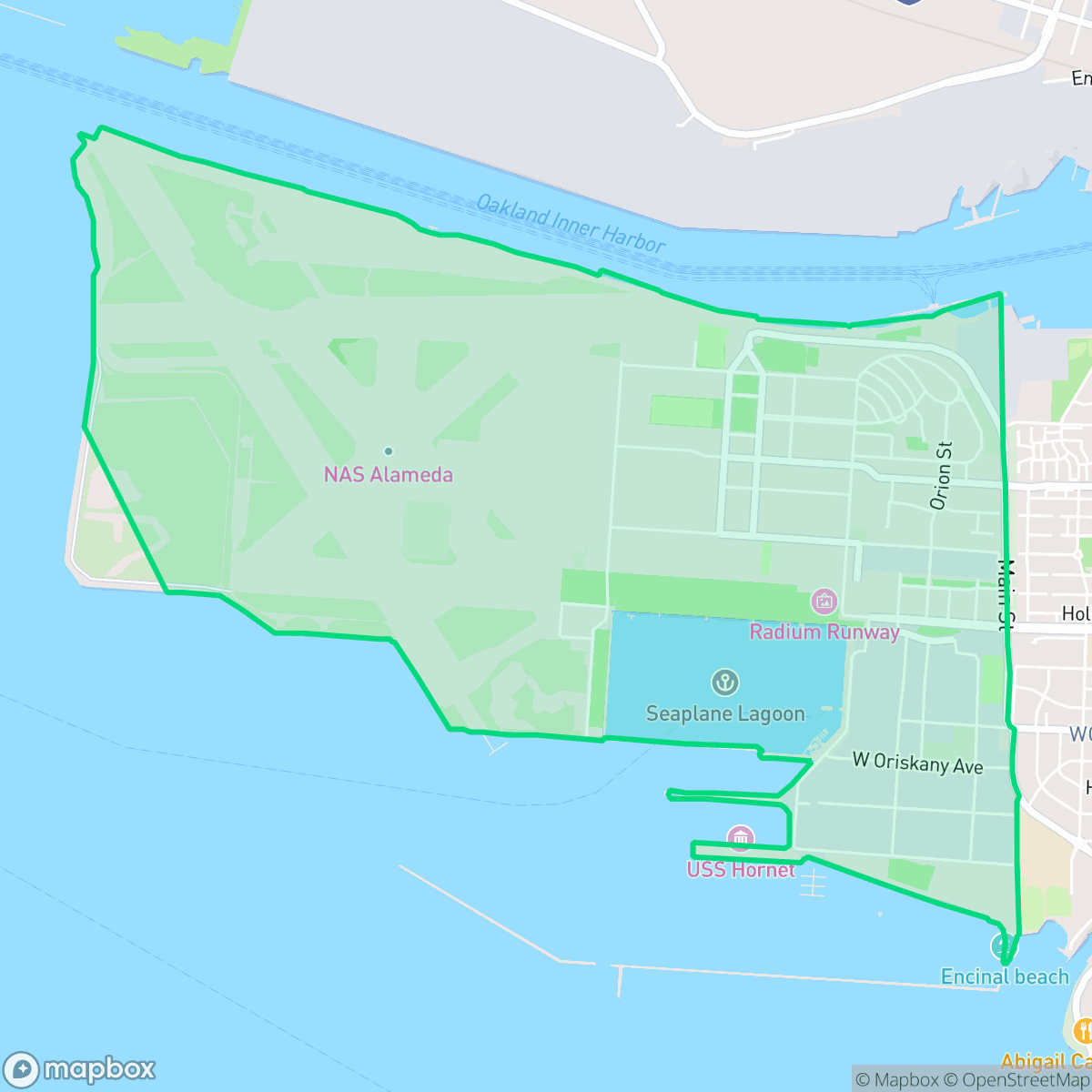
Located on the western tip of Alameda Island, Alameda Point is a 1,560-acre neighborhood largely built on land reclaimed from the San Francisco Bay. Its history began in 1927 as a Pan American World Airways airfield before the city ceded the site to the federal government in 1936. Commissioned in 1940 as the Naval Air Station (NAS) Alameda, the base served as a critical hub during World War II, famously playing a key role in the Doolittle Raid. Following its closure in 1997, the area transitioned into a mixed-use waterfront neighborhood. Today, the NAS Alameda Historic District preserves over 90 historic buildings, while former military structures and runways have been repurposed for housing, commercial spaces, and a thriving local brewery and distillery scene.
The neighborhood functions as a distinct, low-density enclave that blends residential life with large-scale maritime facilities and logistics warehouses. It is characterized by its vast, open landscapes and a quiet, suburban rhythm that stands in contrast to the more bustling parts of the island. Local social life is anchored by niche destinations like The Rake at Admiral Maltings and the Alameda Naval Air Museum, providing unique cultural touchpoints within a largely industrial setting. Living here requires balancing the benefits of a high-performing school district and a serene, spacious environment against the realities of an active industrial zone. Prospective residents should note the presence of nearby environmental sites and the need for a vehicle, as the neighborhood features lower walkability compared to the rest of the city. It is best suited for those who prioritize space, quiet, and proximity to the coastline over high-density urban convenience.
Neighborhood Scores Across 15 Qualities
Residential spacing provides a moderate level of separation between neighbors, offering more privacy than the average Alameda neighborhood. According to iHuus data, the area features a mix of density and buffer zones between properties.
Sidewalks and safe crossings are available for pedestrians, though the area is less walkable than the average Alameda neighborhood according to iHuus data.
Residential structures feature uniform, boxy designs and compact yards. This aesthetic is less visually diverse than the average for Alameda.
Wide paths and interconnected green spaces provide a safe environment for walking dogs away from traffic. This level of accessibility for pets is higher than the average for the city of Alameda.
Expansive maritime infrastructure and large-scale industrial facilities create a more open, semi-rural feel than most of Alameda. This landscape features vast paved surfaces, large-footprint hangars, and significant pockets of open land according to iHuus data.
Local activity is much lower than the city average, as the area consists primarily of industrial warehouses, railway tracks, and vast open spaces. While a few dining and wellness spots exist near the coastline, the landscape lacks a dense concentration of walkable businesses.
Steady hum from nearby busy streets characterizes the local soundscape, though levels are notably quieter than the typical city average according to iHuus data.
Air quality remains consistently good with infrequent periods of elevated readings. This level of air purity is typical for the city of Alameda.
Active commercial zones and maritime infrastructure exist alongside residential pockets, though the area features significantly more industrial activity and logistics-related traffic than the typical Alameda neighborhood. Residents should be aware of nearby large-scale operational facilities and the proximity to an EPA Superfund site.
Health insurance coverage among residents is high, though it remains slightly below the average for the city of Alameda. According to iHuus data, a significant majority of the population maintains coverage.
Voting patterns and census indicators reflect a deeply liberal community that is very similar to the broader Alameda average.
A balanced mix of young adults, families, and seniors resides here, representing a slightly more concentrated demographic spread than the average found across Alameda. According to iHuus data, this variety contributes to a multi-generational community atmosphere.
Flood risk in this area is higher than the city average, though the specific level of danger remains undetermined due to a lack of detailed federal studies. Residents should remain aware of potential vulnerabilities during extreme weather events according to iHuus data.
Address-Level Insights for Alameda Point


iHuus Neighborhood Intelligence Insights
Get address-level neighborhood insights for Alameda Point
- Street-level scores — see how individual blocks compare, not just neighborhood averages
- Micro-zone boundaries — identify quiet pockets, flood boundaries, and walkable clusters before you visit
- 15 dimensions in full — walkability, noise, air quality, school quality, insurance coverage, population age profile, urban/rural index, and more
- Boundary risk alerts — know if your address sits near a block boundary where scores drop, the kind of detail no listing will ever mention
- School insights — individual school ratings and insights, not just district-level data
- Compare before you commit — side-by-side data across neighborhoods, down to block precision
No credit card required
Compare with Any Neighborhood
| Dimension | Alameda Point | Ballena Bay |
|---|---|---|
| 🚶 Walkabilityavg 9.54 | ||
| 🔊 Acoustic Comfortavg 3.74 | ||
| 🤫 Privacy Indexavg 4.01 | ||
| 🎨 Visual Appealavg 6.39 | ||
| 🐕 Dog Friendlinessavg 7.11 | ||
| 🗺️ Urban-Rural Indexavg 6.41 | ||
| ✨ Neighborhood Vibeavg 5.24 | ||
| 🏥 Health Insurance Coverageavg 9.02 | ||
| 🌿 Air Qualityavg 8 | ||
| 🏭 Industrial Proximityavg 8.45 | ||
| 🌊 Flood Safetyavg 4.99 | ||
| 🗳️ Ideological Leanavg 9.88 | ||
| 👥 Population Age Profileavg 5.15 | ||
| 🔥 Fire Safety | ||
| 🏫 School Quality |
Alameda Point Rankings
School Districts Serving Alameda Point
School Insights for Alameda Point
Below average outcomes; significant attendance and academic challenges.
School Insights
See what's really behind every school rating near Alameda Point
- Individual school ratings — each school's own score with outcome context, not just a district average
- Enrollment & class size data — student-to-teacher ratio and how it compares to the state average
- Full demographics breakdown — ethnicity and gender composition for every school in the enrollment zone
- Every school in the district — all schools within the enrollment boundary ranked by rating, not just the closest one
- Grade levels & benchmarks — elementary through high school, with below/above state-average flags
No credit card required