Wells Branch, Wells Branch
Updated · 14,256 residents
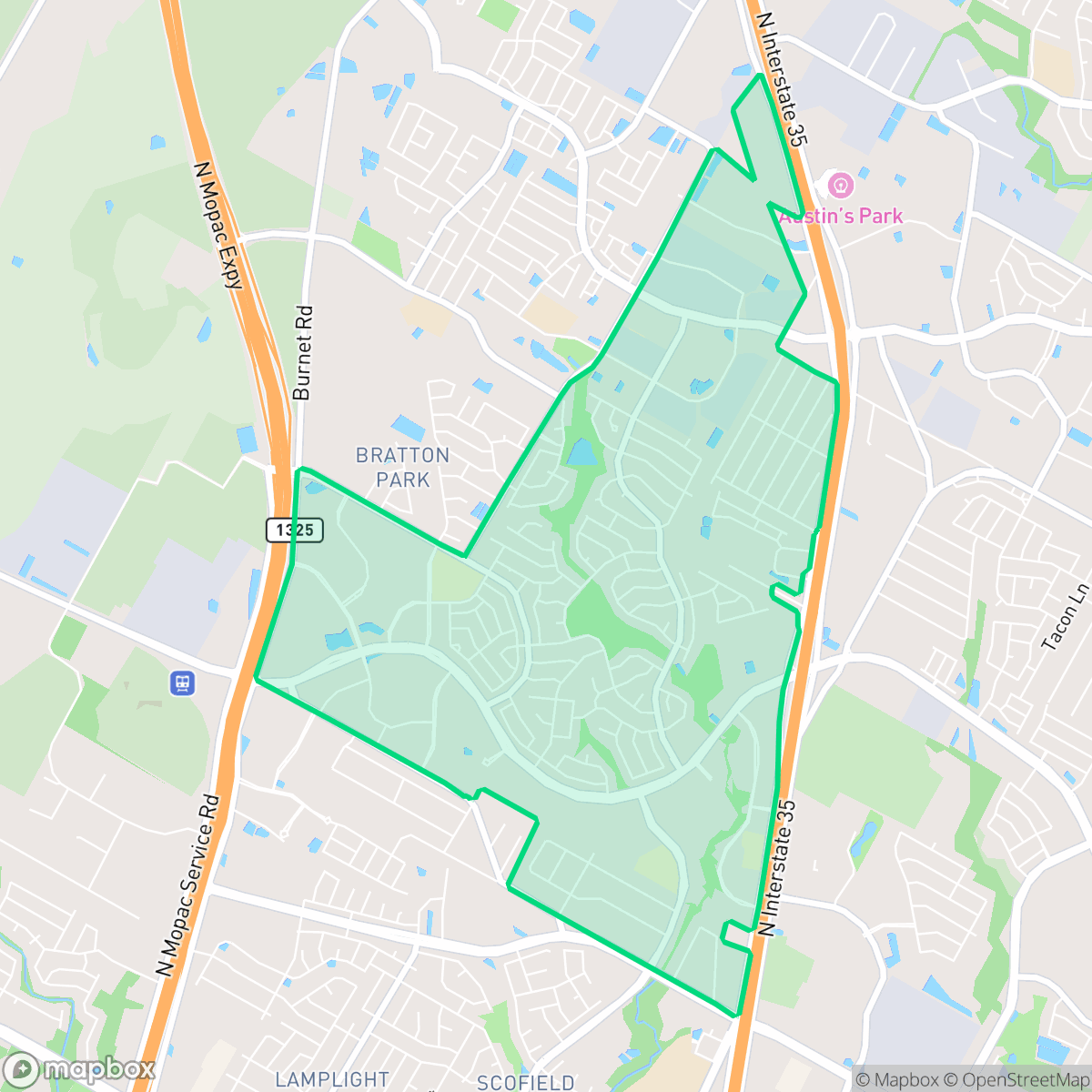
Wells Branch is a North Austin community defined by its extensive trail network, public parks, and a resident-led utility district. The area offers high walkability and convenient access to green spaces, effectively balancing suburban residential life with proximity to major transit corridors.
Key Highlights

Ask about Wells Branch
Get a clearer, more personal picture of the neighborhood with local insights on schools, walkability, noise and more.
About Wells Branch
The Wells Branch neighborhood in North Austin traces its history back to the late 1820s, when Wayman F. and Mary Emily Wells settled the area. Wayman Wells served as a scout and spy for the Texians during the Texas Revolution. Historically agricultural, the area transitioned into a master-planned residential community starting in 1983. A notable historical landmark is the Gault Homestead, an 1850s pioneer cabin built by John and Martha Gault, located in Katherine Fleischer Park. Uniquely, Wells Branch is governed by a resident-led Municipal Utility District (MUD). After residents won control of the MUD board in 1987, they prioritized community-driven development, creating a robust park system, a six-mile trail network, Mills Pond, and the voter-approved Wells Branch Community Library.
The area functions as a dense suburban environment that blends single-family homes with large apartment complexes. Residents benefit from a robust infrastructure that includes the scenic Mills Pond and the recreational facilities at Katherine Fleischer Park. According to iHuus data, the neighborhood maintains a consistent suburban aesthetic characterized by tree-lined streets and a strong emphasis on outdoor accessibility. Commercial activity is present, with light industrial zones and retail strips situated near major highway access points.
Potential residents should consider the trade-offs of living in a well-connected suburban hub. While the walkability is high for the region, the area experiences moderate road traffic noise and faces challenges regarding flood safety. Educational options vary significantly, as the neighborhood is served by both the Round Rock and Pflugerville independent school districts. It remains an attractive option for pet owners due to the abundance of grassy verges and green corridors that connect residential blocks to local amenities.
Neighborhood Scores Across 15 Qualities
Residential spacing is consistent with the city average, offering a mix of detached homes with standard setbacks and denser apartment clusters. Privacy levels vary depending on whether a resident is located in a single-family lot or a high-density housing block, according to iHuus data.
Sidewalk networks and safe crossings are consistent with the city average, offering dependable paths for pedestrians throughout residential areas. While many streets feature complete sidewalks on both sides, connectivity can be limited near busy arterials and industrial zones according to iHuus data.
Visual surroundings consist of a mix of larger homes with private pools and denser, multi-family apartment complexes. This level of visual variety is consistent with the Austin city average.
Wide grass verges and connected green corridors provide many safe, traffic-free paths for pets. This level of accessibility for animal exercise is consistent with the city average.
Residential areas consist of a diverse blend of single-family homes, apartment complexes, and light industrial warehouses. This landscape matches the typical urban-rural balance found across the wider city.
A mix of residential streets, light industrial units, and diverse dining options creates a balanced environment that matches the city average for activity. While some pockets offer walkable access to local eateries, much of the area remains car-dependent due to the proximity of highways and warehouses.
A steady hum from nearby busy streets characterizes the local acoustic environment. This level of ambient sound is consistent with the city average.
Air quality in this area is consistent with the Austin average, presenting a mix of acceptable and unhealthy days that may cause occasional concern for sensitive groups. According to iHuus data, residents can expect standard atmospheric conditions for the region.
Light industrial warehouses and utility substations are present in certain sections, which is consistent with the city average. Residents may encounter semi-truck traffic and large-scale distribution hubs near the southwest corner of the neighborhood.
Health insurance access in Wells Branch is consistent with the Austin city average. This level of coverage indicates a stable landscape for resident healthcare access according to iHuus data.
Voting patterns and census indicators show a strong liberal leaning that is consistent with the city average, according to iHuus data.
Residents live alongside a balanced demographic of young adults, families, and seniors. According to iHuus data, the age distribution in Wells Branch is consistent with the broader Austin area.
Flood risk in this area is difficult to assess because FEMA has not yet completed a detailed study for this specific location. According to iHuus data, the level of risk is consistent with the average found across the city.
Wells Branch Rankings
School Districts Serving Wells Branch
Frequently Asked Questions
Next step
Looking for a home around Wells Branch?
Search available homes and see how they fit the neighborhood qualities that matter to you.
You can refine your budget and priorities on the next screen.