Sea Isle, Galveston
Updated · 180 residents
Sea Isle is a quiet, resort-style community on the western edge of Galveston Island, characterized by its canal-front homes and active boating culture. While the area offers a peaceful coastal atmosphere, residents should be aware of the notable noise levels from nearby road traffic and the inherent risks associated with its low-lying coastal geography.
Key Highlights
About Sea Isle
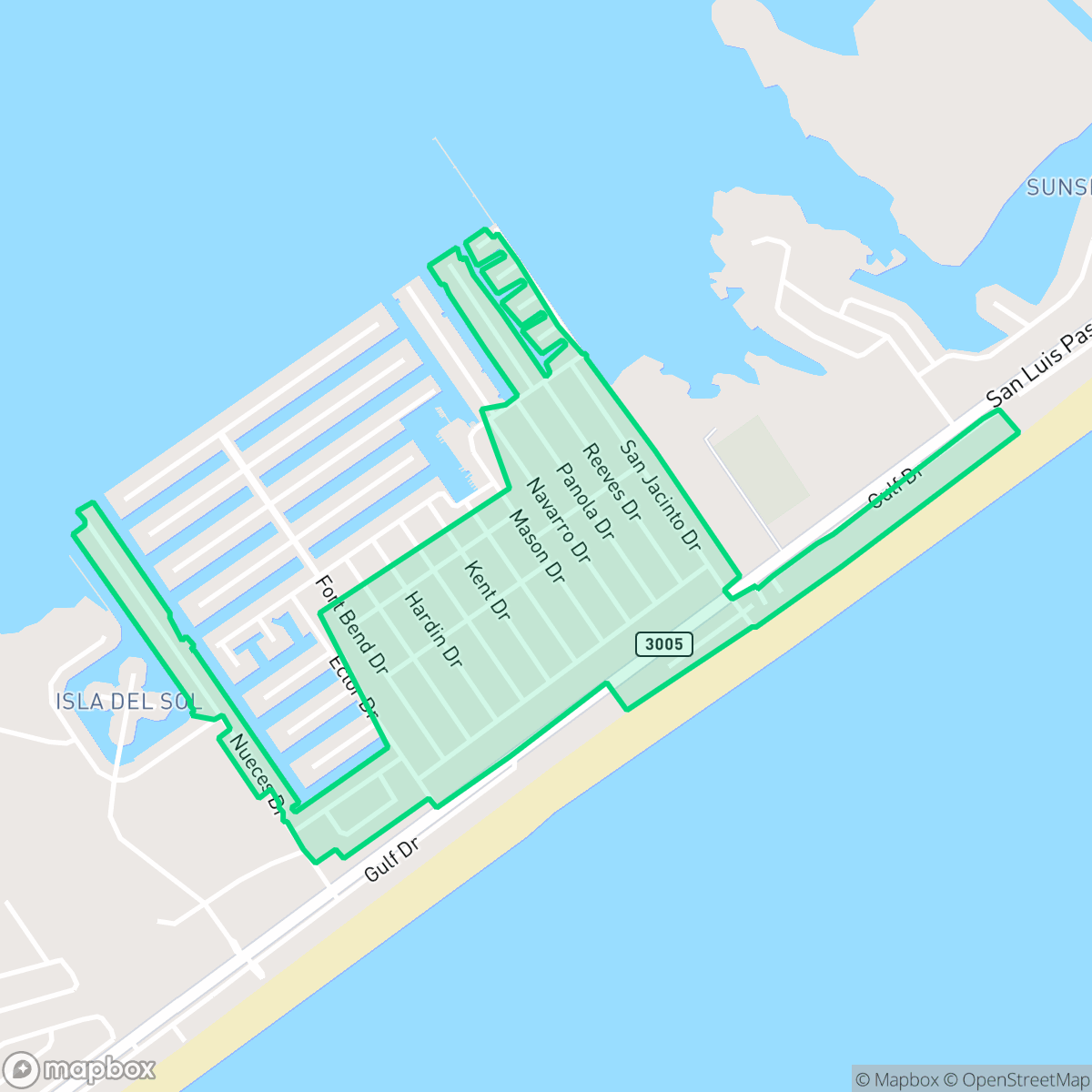
Established in 1950 on the far western end of Galveston Island, Sea Isle is a mature, resort-style coastal community straddling FM 3005 from Galveston Bay to the Gulf of Mexico. Developed in part by prominent West End builder David Feinman, the neighborhood features a mix of beachfront, dry land, and canal-front homes. It is highly defined by its active boating, fishing, and golf cart culture. Central to Sea Isle's community identity are its local landmarks, including the Sea Isle Marina, the Sea Isle Fishing Pier, and the West End Marina & Restaurant, which serve as popular gathering spots for both full-time residents and seasonal visitors.
The neighborhood functions as a secluded retreat for those prioritizing water access and a relaxed pace of life. Its layout, which spans from the bay to the Gulf, fosters a distinct community centered around the marina and fishing pier. According to iHuus data, the area maintains a moderate level of privacy and a suburban feel, though it is less walkable than more central parts of Galveston. The landscape is dominated by residential properties and open green spaces, creating a tranquil environment that appeals primarily to seasonal visitors and retirees.
Livability trade-offs include a high reliance on vehicles for daily errands and a significant vulnerability to flooding. While the area provides excellent access to recreational water activities, the acoustic environment is influenced by consistent traffic noise from FM 3005. Families considering the area should evaluate the local school district, which provides modern facilities but faces ongoing academic performance challenges.
Neighborhood Scores Across 15 Qualities
Residential spacing offers a moderate level of separation between neighbors, which is higher than the average for Galveston. According to iHuus data, the area features mixed building density with some natural buffers between properties.
Low-traffic streets offer a peaceful environment for strolls, though the lack of sidewalks makes navigating the area less convenient than in other parts of Galveston. According to iHuus data, walking accessibility here is below the city average.
Large residences and high-end amenities define the local landscape. This neighborhood offers a more polished aesthetic than the Galveston average, according to iHuus data.
Access to dedicated dog parks and expansive green verges is consistent with the broader Galveston area. Residents will find typical opportunities for pet walking, though there are no notable surpluses of specialized canine facilities in this neighborhood.
Open land and scattered homes define this area, offering a slightly more open landscape than the typical Galveston urban density. According to iHuus data, the neighborhood maintains more pockets of greenery and undeveloped space compared to the city average.
Residential life follows a serene and steady rhythm characterized by vast open spaces and minimal commercial development. This neighborhood offers a more tranquil atmosphere than the Galveston average, though limited local business presence makes the area largely car-dependent.
Frequent loud disturbances from nearby airport runways and heavy rail infrastructure make this area significantly noisier than the rest of Galveston. Residents can expect constant acoustic disruptions according to iHuus data.
Industrial activity is absent from this area, providing a strictly residential environment with no detected warehouses or hazard sites. This lack of industrial proximity is notably higher than the Galveston average, according to iHuus data.
Health insurance accessibility is notably higher here than the Galveston average, according to iHuus data. Residents in this area benefit from a significantly greater proportion of insured individuals compared to the rest of the city.
Voting patterns and census indicators show a strongly conservative leaning, which is notably different from the more politically balanced average seen across Galveston.
A balanced mix of young adults, families, and older residents characterizes the area. According to iHuus data, this demographic spread is more varied than the typical profile seen across Galveston.
Located in a coastal high-hazard zone, this area faces significant exposure to wave action and much higher flood risk than the Galveston average. Residents should anticipate elevated or potentially prohibitive flood insurance costs according to iHuus data.
Address-Level Insights for Sea Isle


iHuus Neighborhood Intelligence Insights
Get address-level neighborhood insights for Sea Isle
- Street-level scores — see how individual blocks compare, not just neighborhood averages
- Micro-zone boundaries — identify quiet pockets, flood boundaries, and walkable clusters before you visit
- 15 dimensions in full — walkability, noise, air quality, school quality, insurance coverage, population age profile, urban/rural index, and more
- Boundary risk alerts — know if your address sits near a block boundary where scores drop, the kind of detail no listing will ever mention
- School insights — individual school ratings and insights, not just district-level data
- Compare before you commit — side-by-side data across neighborhoods, down to block precision
No credit card required
Sea Isle Rankings
School Districts Serving Sea Isle
School Insights for Sea Isle
Below average outcomes; significant attendance and academic challenges.
School Insights
See what's really behind every school rating near Sea Isle
- Individual school ratings — each school's own score with outcome context, not just a district average
- Enrollment & class size data — student-to-teacher ratio and how it compares to the state average
- Full demographics breakdown — ethnicity and gender composition for every school in the enrollment zone
- Every school in the district — all schools within the enrollment boundary ranked by rating, not just the closest one
- Grade levels & benchmarks — elementary through high school, with below/above state-average flags
No credit card required