Maitland Park, Maitland
Updated · 954 residents
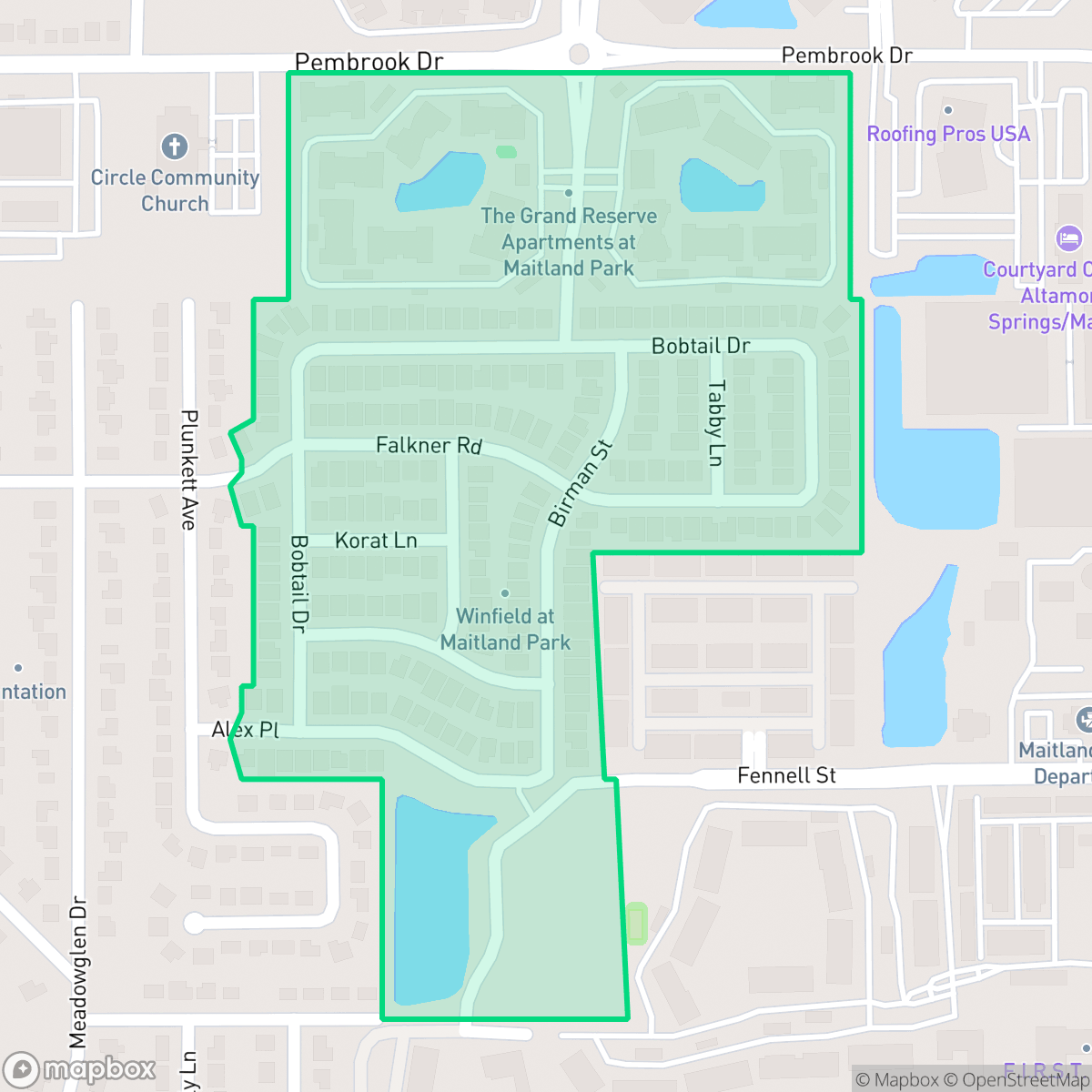
Maitland Park is a diverse suburban neighborhood in Maitland, Florida, characterized by a blend of single-family homes and apartment complexes. It offers reliable sidewalk access for pedestrians, though the area experiences noticeable noise from nearby major roadways.
Key Highlights
About Maitland Park
Maitland Park functions as a steady suburban hub, blending residential living with light commercial activity. The landscape features a mix of tract-style housing and multi-story apartment buildings, creating a denser environment than many other parts of the city. While the neighborhood lacks the visual variety found in more historic districts, it provides a functional layout with consistent sidewalk networks that support local walking. According to iHuus data, the area maintains a distinct liberal-leaning political identity, reflecting a diverse demographic of young adults, families, and older residents. Residents should consider the trade-offs of this central location, particularly regarding acoustic comfort and environmental factors. The proximity to major transit paths results in frequent traffic noise, and air quality can occasionally fluctuate. While the area provides decent space for pet owners, it sits within a five-hundred-year floodplain, necessitating awareness of local flood risks. The neighborhood is served by the Orange County School District, which offers stable academic resources despite ongoing operational adjustments across the county. This area is well-suited for those prioritizing suburban connectivity and access to local services over absolute quiet or extensive privacy.
Neighborhood Scores Across 15 Qualities
Residential spacing varies between clustered townhomes and single-family homes with some buffer zones. This level of density is higher than the Maitland average, according to iHuus data.
Internal residential streets and major intersections feature consistent sidewalk networks and safe crossings. While pedestrian connectivity is slightly above the Maitland average, heavy traffic from nearby multi-lane highways can interrupt continuous walking paths.
Uniform housing patterns and shared apartment amenities define the area, which offers less visual variety than the Maitland average. Landscapes consist primarily of standard tract homes and commercial office parks.
Sidewalk verges and grassy retention ponds provide adequate space for pet strolls, though the neighborhood sits slightly below the Maitland average for direct access to large public parks.
Residential pockets feature a variety of single-family homes and multi-story apartment complexes alongside commercial plazas. This environment is slightly more developed than the city average, providing a blend of dense suburban living and managed green space.
A consistent mix of office spaces, apartments, and local services provides a more active environment than the typical Maitland suburb. While some pockets are centered around quiet parks and wellness centers, other areas function as lively local hubs for dining and fitness.
Frequent noise from nearby major roadways and transit paths persists throughout the area. This level of acoustic disturbance is slightly higher than the average found across Maitland.
Air quality in this area fluctuates between acceptable and unhealthy levels, sitting slightly below the Maitland average. Sensitive individuals may experience occasional concerns during certain periods according to iHuus data.
Primarily residential in nature, this area contains only light commercial activity and occasional low-level operational noise. This level of industrial proximity is consistent with the city average.
Health insurance enrollment among residents is slightly lower than the average seen across Maitland. According to iHuus data, a significant portion of the population remains covered, though access levels trail the broader city average.
Political leanings in this area favor liberal perspectives more significantly than the average for Maitland. According to iHuus data, a liberal majority exists here alongside a modest opposing presence.
A balanced mix of young adults, families, and older residents defines the area. According to iHuus data, this demographic spread is slightly more concentrated toward certain age groups than the Maitland city average.
Residual flood risk exists within this area as it falls inside a five hundred year floodplain. According to iHuus data, the safety level is slightly lower than the Maitland city average.
Address-Level Insights for Maitland Park


iHuus Neighborhood Intelligence Insights
Get address-level neighborhood insights for Maitland Park
- Street-level scores — see how individual blocks compare, not just neighborhood averages
- Micro-zone boundaries — identify quiet pockets, flood boundaries, and walkable clusters before you visit
- 15 dimensions in full — walkability, noise, air quality, school quality, insurance coverage, population age profile, urban/rural index, and more
- Boundary risk alerts — know if your address sits near a block boundary where scores drop, the kind of detail no listing will ever mention
- School insights — individual school ratings and insights, not just district-level data
- Compare before you commit — side-by-side data across neighborhoods, down to block precision
No credit card required
Maitland Park Rankings
School Districts Serving Maitland Park
School Insights for Maitland Park
Below average outcomes; significant attendance and academic challenges.
School Insights
See what's really behind every school rating near Maitland Park
- Individual school ratings — each school's own score with outcome context, not just a district average
- Enrollment & class size data — student-to-teacher ratio and how it compares to the state average
- Full demographics breakdown — ethnicity and gender composition for every school in the enrollment zone
- Every school in the district — all schools within the enrollment boundary ranked by rating, not just the closest one
- Grade levels & benchmarks — elementary through high school, with below/above state-average flags
No credit card required