Hannalei Hills, Vista
Updated · 2,022 residents
Hannalei Hills is a quiet, low-density residential area in Vista characterized by well-maintained landscaping and spacious homes. While the neighborhood offers a polished aesthetic and clean air, residents experience notable noise levels from nearby transit corridors and should be aware of significant flood risks.
Key Highlights
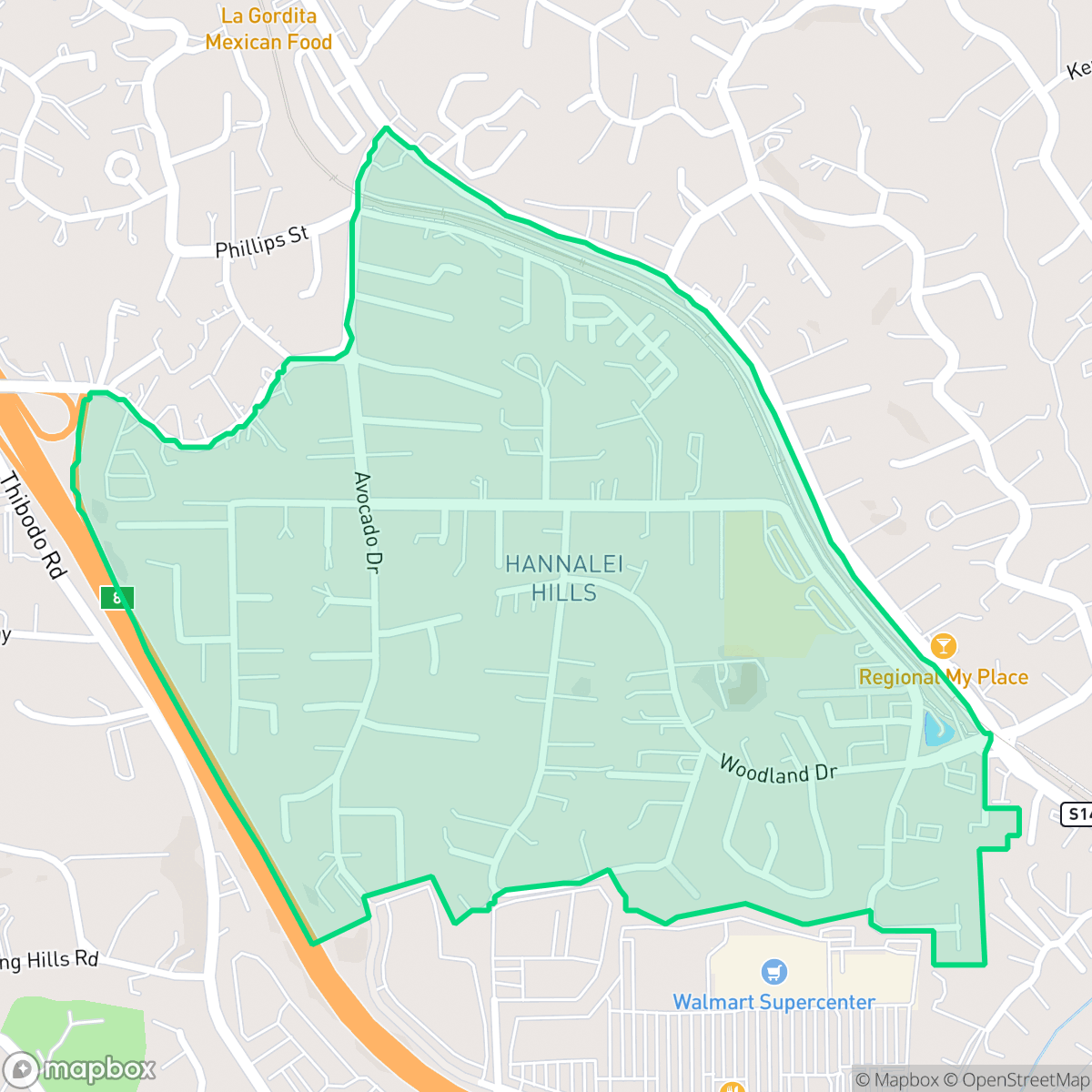
About Hannalei Hills
Hannalei Hills features a mix of single-family homes and apartment clusters, creating a suburban environment that prioritizes privacy and visual appeal. The landscape is marked by manicured lawns and private pools, contributing to a quiet, subdued atmosphere that remains insulated from heavy industrial activity. Because the neighborhood is primarily residential with few local commercial hubs, it maintains a low-key vibe that appeals to those seeking a retreat from the city's more active districts.
Living in this area requires consideration of several environmental and logistical trade-offs. The neighborhood is situated within a floodplain, which presents a higher risk than many other parts of Vista. Additionally, the proximity to major freeways results in frequent traffic noise, and the limited sidewalk infrastructure makes the area largely dependent on personal vehicles for daily errands. While the demographic profile is diverse, families should note that local schools operate within a district currently facing significant budgetary and operational transitions according to iHuus data.
Neighborhood Scores Across 15 Qualities
Housing layouts feature a blend of tightly packed apartment clusters and more spacious single-family homes. According to iHuus data, this provides slightly more buffer between neighbors than is typical for the Vista area.
Quiet residential streets and wide cul-de-sacs offer opportunities for walking, though the lack of sidewalks and the presence of a major highway make it less walkable than the Vista average. Large commercial lots also bisect the area, which can limit pedestrian connectivity according to iHuus data.
Large homes with private pools and well-maintained landscaping define this area. According to iHuus data, the visual quality of the residential landscape is notably higher than the Vista average.
Private yards and fenced greenery are common, but access to public parks and wide, open verges is below the Vista average according to iHuus data.
Residential pockets feature a blend of single-family homes and apartment complexes alongside large commercial centers. This landscape is consistent with the typical urban-rural balance found throughout Vista.
Primarily residential and low-density, this area offers a subdued atmosphere with significantly fewer commercial hubs than the Vista average. Most local services are limited to a small number of essential eateries and religious centers, making the neighborhood largely car-dependent for most errands.
Frequent noise from nearby major freeways and transit corridors makes this area louder than much of Vista. According to iHuus data, residents may experience consistent acoustic disturbances throughout the day.
Air quality remains mostly clean with rare instances of elevated readings. This level of-cleanliness is higher than the average for Vista, according to iHuus data.
Minimal industrial activity defines this area, providing a primarily residential environment with only occasional light commercial activity. According to iHuus data, the lack of heavy industry here is slightly lower than the Vista city average.
Health insurance access in this area is slightly higher than the Vista average, according to iHuus data. Residents may find that coverage rates are typical for the region.
Political viewpoints in this area are split relatively evenly between conservative and liberal leanings. This represents a more moderate ideological landscape than the broader Vista area, according to iHuus data.
Residents live alongside a balanced mix of young adults, families, and seniors. This demographic distribution is largely in line with the broader Vista area, according to iHuus data.
Significant flood risk exists here as the area is located within a 100-year floodplain. According to iHuus data, this level of vulnerability is notably higher than the average for Vista.
Address-Level Insights for Hannalei Hills


iHuus Neighborhood Intelligence Insights
Get address-level neighborhood insights for Hannalei Hills
- Street-level scores — see how individual blocks compare, not just neighborhood averages
- Micro-zone boundaries — identify quiet pockets, flood boundaries, and walkable clusters before you visit
- 15 dimensions in full — walkability, noise, air quality, school quality, insurance coverage, population age profile, urban/rural index, and more
- Boundary risk alerts — know if your address sits near a block boundary where scores drop, the kind of detail no listing will ever mention
- School insights — individual school ratings and insights, not just district-level data
- Compare before you commit — side-by-side data across neighborhoods, down to block precision
No credit card required
Hannalei Hills Rankings
School Districts Serving Hannalei Hills
School Insights for Hannalei Hills
Below average outcomes; significant attendance and academic challenges.
School Insights
See what's really behind every school rating near Hannalei Hills
- Individual school ratings — each school's own score with outcome context, not just a district average
- Enrollment & class size data — student-to-teacher ratio and how it compares to the state average
- Full demographics breakdown — ethnicity and gender composition for every school in the enrollment zone
- Every school in the district — all schools within the enrollment boundary ranked by rating, not just the closest one
- Grade levels & benchmarks — elementary through high school, with below/above state-average flags
No credit card required