Pine Mountain Club, Pine Mountain Club
Updated · 2,605 residents
Pine Mountain Club is a remote, rural mountain community defined by its scenic, quiet atmosphere and proximity to the Los Padres National Forest. While the area offers exceptional visual appeal and high dog friendliness, it remains a car-dependent location with limited local services and a tranquil, low-key pace of life.
Key Highlights
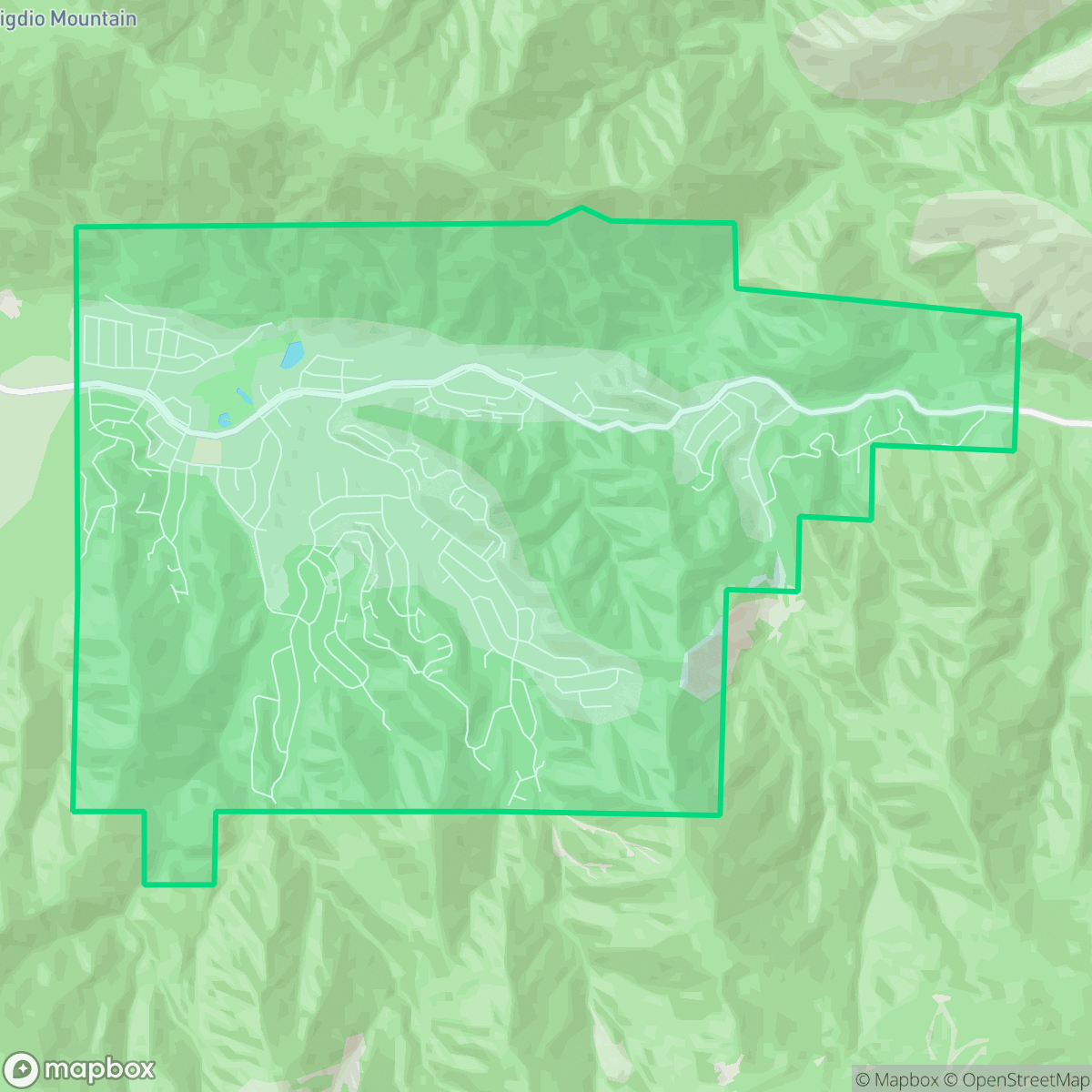
About Pine Mountain Club
Nestled in a deep valley of the San Emigdio Mountains, Pine Mountain Club was originally part of the historic Mil Potrero Ranch, where cattle grazed and a pre-Civil War sawmill once supplied timber to Fort Tejon. In 1971, Tenneco West developed the 3,200-acre private woodland into a master-planned mountain community. To balance recreation with conservation, the master plan allocated 1,000 acres for all-electric vacation homes and dedicated 2,200 acres to permanent open-space preservation. To establish the community, Tenneco West invested nearly one million dollars to transform a steep, single-lane dirt track into the modern Mil Potrero Highway, opening access to the scenic area. Today, the community is managed by its property owners' association, retaining its signature rustic, village-like character surrounded by the Los Padres National Forest.
The neighborhood functions as a secluded retreat, offering vast open spaces and a quiet landscape that prioritizes residential privacy. Residents enjoy a high degree of visual appeal, characterized by woodland surroundings and a consistent rhythm of mountain living. While the area lacks significant industrial proximity, it provides a serene environment for those seeking to escape urban density. According to iHuus data, the community maintains a distinct rural identity, focusing on lifestyle and wellness services rather than commercial development. Prospective residents should note that the area requires a car for most daily needs, as the local infrastructure is designed for a quiet, car-dependent lifestyle. The neighborhood faces specific environmental challenges, including low scores for fire and flood safety, which are critical considerations for property owners in this region. Educational needs are served by the El Tejon Unified School District, which offers a stable, small-town academic environment. Overall, the area is best suited for individuals who prioritize natural surroundings and a peaceful, slow-paced lifestyle over proximity to urban amenities or high-intensity social scenes.
Neighborhood Scores Across 15 Qualities
Residential spacing is mixed, offering some buffer between neighbors. This level of privacy is roughly consistent with the city average according to iHuus data.
Low traffic volumes and quiet streets make for pleasant strolls, though the lack of sidewalks is a notable characteristic. According to iHuus data, walkability in this area is roughly in line with the city average.
Large residential properties and frequent upscale amenities contribute to a landscape that is slightly more visually appealing than the city average. According to iHuus data, the area features wide driveways and well-maintained surroundings.
Abundant parks and open spaces provide exceptional opportunities for outdoor activities with pets. This level of access to trails is even higher than the city average, according to iHuus data.
Dense forests and undeveloped landscapes define this area. According to iHuus data, the environment is entirely rural, matching the characteristic lack of urban development found throughout the rest of the city.
This rural landscape offers a serene environment with minimal development and few local businesses. Residents should expect a quiet, car-dependent lifestyle that is consistent with the broader city average for liveliness.
Frequent noise from nearby transportation corridors, such as busy freeways or flight paths, characterizes this area. According to iHuus data, acoustic comfort levels in this neighborhood are consistent with the city average.
Industrial activity is non-existent in this area, providing a landscape of quiet streets and open green spaces that is even more residential than the surrounding city average. According to iHuus data, there are no warehouses, manufacturing facilities, or hazard sites located within the neighborhood boundaries.
Health insurance accessibility is high among residents, sitting slightly above the city average according to iHuus data.
Political views within the community are closely aligned with the broader city average, reflecting a relatively even split between conservative and liberal leanings.
Residents live alongside a balanced mix of young adults, families, and older populations. This demographic distribution is consistent with the city average according to iHuus data.
Wildfire danger is severe in this area, necessitating maximum protection measures and constant vigilance. This level of risk is consistent with the local city average, according to iHuus data.
Address-Level Insights for Pine Mountain Club


iHuus Neighborhood Intelligence Insights
Get address-level neighborhood insights for Pine Mountain Club
- Street-level scores — see how individual blocks compare, not just neighborhood averages
- Micro-zone boundaries — identify quiet pockets, flood boundaries, and walkable clusters before you visit
- 15 dimensions in full — walkability, noise, air quality, school quality, insurance coverage, population age profile, urban/rural index, and more
- Boundary risk alerts — know if your address sits near a block boundary where scores drop, the kind of detail no listing will ever mention
- School insights — individual school ratings and insights, not just district-level data
- Compare before you commit — side-by-side data across neighborhoods, down to block precision
No credit card required
Pine Mountain Club Rankings
School Districts Serving Pine Mountain Club
School Insights for Pine Mountain Club
Below average outcomes; significant attendance and academic challenges.
School Insights
See what's really behind every school rating near Pine Mountain Club
- Individual school ratings — each school's own score with outcome context, not just a district average
- Enrollment & class size data — student-to-teacher ratio and how it compares to the state average
- Full demographics breakdown — ethnicity and gender composition for every school in the enrollment zone
- Every school in the district — all schools within the enrollment boundary ranked by rating, not just the closest one
- Grade levels & benchmarks — elementary through high school, with below/above state-average flags
No credit card required