California Park, Larkspur
Updated · 681 residents
California Park is a small, semi-rural neighborhood in Larkspur characterized by a mix of residential and light industrial development. Residents experience a steady suburban rhythm, though the area is notably impacted by aircraft noise and limited pedestrian infrastructure.
Key Highlights
About California Park
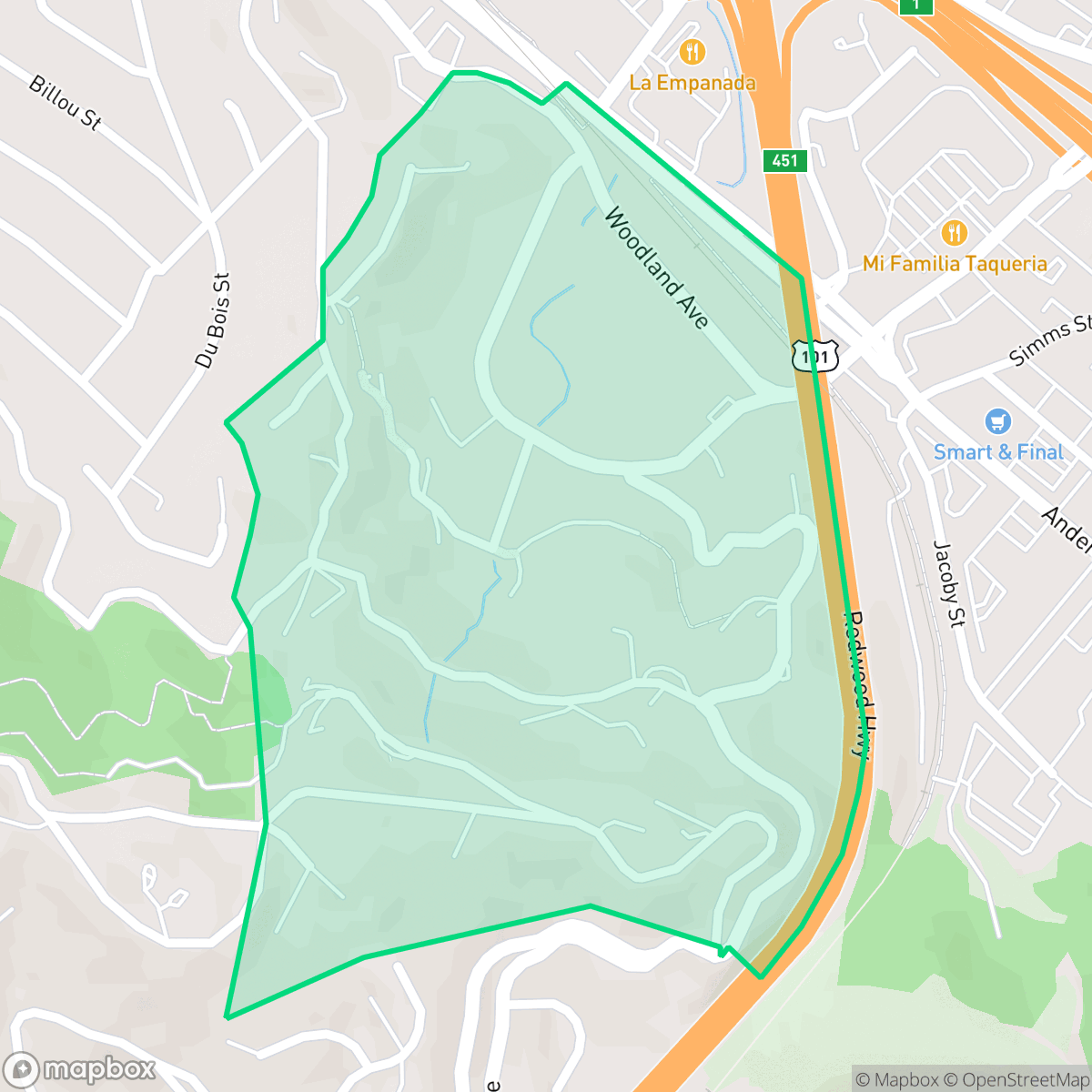
The neighborhood offers a distinct, semi-rural landscape that blends residential living with pockets of light industrial activity. While it maintains a steady suburban pace, it is defined by its proximity to major transit corridors and flight paths, which contribute to elevated noise levels. The housing here consists of modest structures with limited privacy due to tight spacing between properties.
Prospective residents should be aware of specific environmental and logistical trade-offs. The area faces significant fire and flood risks, necessitating careful attention to insurance and safety planning. While the neighborhood lacks extensive sidewalk access and dedicated pet spaces, it remains a viable option for those prioritizing access to top-tier school districts like Kentfield and Tamalpais Union, provided they are comfortable with a car-dependent lifestyle.
Neighborhood Scores Across 15 Qualities
Residential and industrial structures are often tightly packed with minimal buffer zones between neighbors. This lack of separation results in a lower level of privacy than is typically found across Larkspur.
Pedestrian navigation is challenging due to a lack of sidewalks and high-traffic freeway corridors. While quiet streets allow for some walking, the area is notably less walkable than the Larkspur average according to iHuus data.
Residential views consist of standard structures and modest housing clusters. According to iHuus data, the visual appeal is notably lower than the Larkspur city average due to a lack of large estates or luxury amenities.
Limited access to parks and a lack of green verges make this area significantly less dog friendly than the rest of Larkspur. Industrial lots and nearby freeway interchanges offer very few walkable spaces for pets, according to iHuus data.
Open land and woodland areas characterize much of the landscape, though parts of the neighborhood transition into a low-density industrial zone near major highway junctions. This environment is less developed than the typical Larkspur setting according to iHuus data.
Dining and service options provide a more active atmosphere than the typical Larkspur average; however, most amenities remain car-dependent. Local streets offer a balance of residential life and light industrial utility near major transit corridors.
Persistent noise from the nearby airport runway makes this area significantly louder than the average Larkspur neighborhood. According to iHuus data, the proximity to flight paths results in very low acoustic comfort.
Air quality is consistently good with rare instances of elevated readings. According to iHuus data, the air quality in this area is slightly lower than the Larkspur average.
A mix of residential development and active commercial units characterizes this area. According to iHuus data, there is significantly less industrial density here than is found across the rest of Larkspur.
Health insurance access is notably lower in this area than in the rest of Larkspur. Residents may find fewer neighbors with employer-sponsored or private coverage according to iHuus data.
Voting patterns and census indicators reflect a predominantly liberal political leaning, consistent with the broader Larkspur area according to iHuus data.
Residents live alongside a variety of age groups, including young adults and families. According to iHuus data, the population distribution is slightly more concentrated in specific age brackets than the Larkspur average.
Significant flood risk exists here due to its location within a coastal high-hazard zone. Residents should anticipate much higher insurance costs than the Larkspur average according to iHuus data.
Extreme fire hazards characterize this area, representing a much higher risk level than the typical Larkspur neighborhood. According to iHuus data, residents in this location require maximum protection measures due to the significant danger of wildfire.
Address-Level Insights for California Park


iHuus Neighborhood Intelligence Insights
Get address-level neighborhood insights for California Park
- Street-level scores — see how individual blocks compare, not just neighborhood averages
- Micro-zone boundaries — identify quiet pockets, flood boundaries, and walkable clusters before you visit
- 15 dimensions in full — walkability, noise, air quality, school quality, insurance coverage, population age profile, urban/rural index, and more
- Boundary risk alerts — know if your address sits near a block boundary where scores drop, the kind of detail no listing will ever mention
- School insights — individual school ratings and insights, not just district-level data
- Compare before you commit — side-by-side data across neighborhoods, down to block precision
No credit card required
California Park Rankings
School Districts Serving California Park
School Insights for California Park
Below average outcomes; significant attendance and academic challenges.
School Insights
See what's really behind every school rating near California Park
- Individual school ratings — each school's own score with outcome context, not just a district average
- Enrollment & class size data — student-to-teacher ratio and how it compares to the state average
- Full demographics breakdown — ethnicity and gender composition for every school in the enrollment zone
- Every school in the district — all schools within the enrollment boundary ranked by rating, not just the closest one
- Grade levels & benchmarks — elementary through high school, with below/above state-average flags
No credit card required